Amid tough job market for young Americans, Fed Chair Powell tells students not to despair
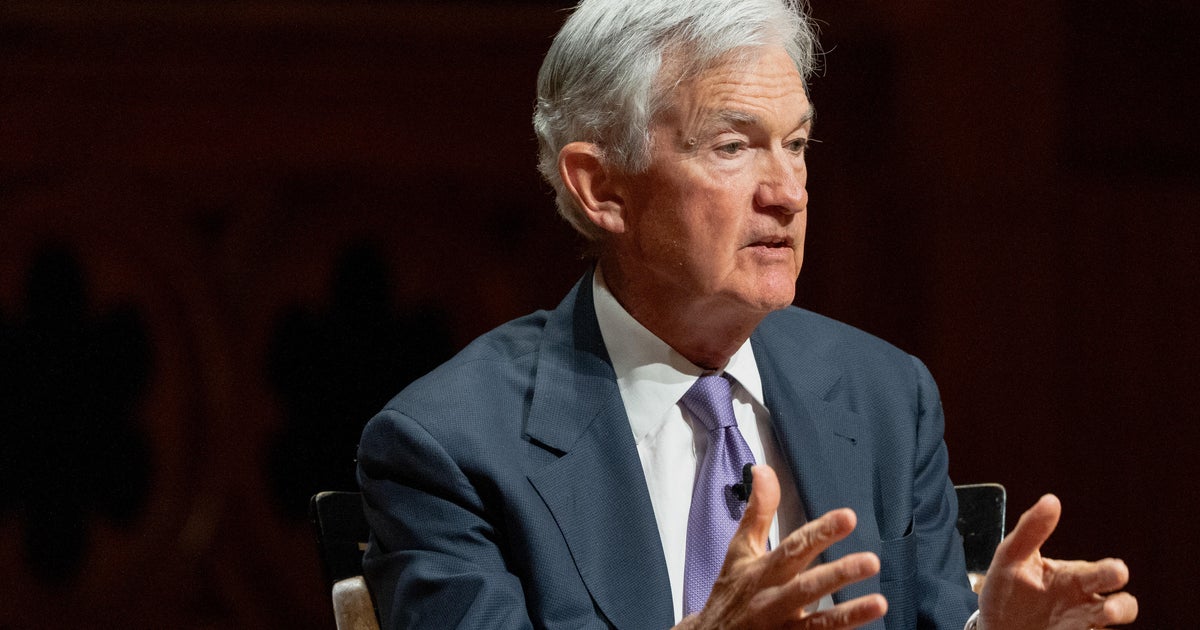
Federal Reserve Chair Jerome Powell has a message for young Americans looking for work in a tough job market: Don’t be deterred, even as job creation remains weak and the threat of artificial intelligence looms.
The Fed chair, who made the comments on Monday to an undergraduate economics class at Harvard University, covered a lot of ground during his hour-long appearance, including the financial system’s capacity to weather future crises. He also touched on inflation amid the war in Iran, saying that longer-term expectations remain in check.
Powell is set to step down from his role as chair in May, when he will be replaced by Kevin Warsh, a former Fed official whom President Trump nominated to the post in January. In the meantime, the Fed is wrangling with economic data showing that the inflation rate remains above the central bank’s 2% annual goal, while surging oil prices are pushing up costs at the gas pump and may ripple through the economy.
“Great opportunities”
Perhaps his most resonant message was for the young people in the room, who could soon find themselves on the hunt for a job in a market marred by slow growth. With a stalled labor market, young Americans in particular are struggling to find work.
“There’s no denying it’s a challenging time to enter the labor market, but it may take some patience and all that, but in the longer term, this economy is going to give you great opportunities,” Powell said Monday.
Sophie Park / Getty Images 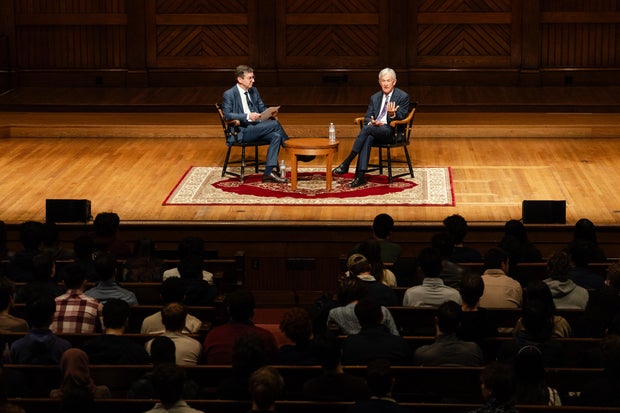
The unemployment rate for 20 to 24-year-olds stands at 7.4%, after topping 9% last fall, Labor Department data shows. That’s higher than the overall unemployment rate, which ticked up to 4.4% in February. Hiring has also been lackluster, with employers adding just 181,000 jobs last year.
Powell acknowledged these challenges but struck a sanguine tone, telling the students in the room that they are part of a historically robust economy that will generate opportunities for them over the long-term.
“The U.S. economy, compared to other major big, market-based economies around the world, is just incredibly dynamic and productive,” he said.
Inflation expectations
Powell also touched on inflation amid the war in Iran, saying that longer-term expectations remain in check.
“The tendency is to look through any kind of a supply shock,” he said, adding, “But a critical, essential aspect of that is you have to carefully monitor inflation expectations, because you can have a series of these supply shocks.”
Some economists have flagged that soaring oil prices could reignite inflation by causing higher prices for transportation, fertilizer and other goods and services that depend on fossil fuels.
Brent crude, the international benchmark, rose to $115 a barrel on Monday before retreating to $107.95, according to data from Oilprice.com and FactSet. West Texas Intermediate, the U.S. benchmark, rose 2% to $101.70. Before the Iran war, both were trading at about $70 a barrel.
Impact of artificial intelligence
Powell also had a positive outlook on artificial intelligence, which is poised to reshape the workforce. Last year, Dario Amodei, CEO of AI company Anthropic, said he thinks the technology could wipe out half of all entry-level white-collar jobs.
Powell recognized that companies are looking for ways to automate jobs as they seek to cut costs. But he said he also believes large language models will make workers more efficient, pointing to past examples of how other technologies, like the loom, revolutionized manufacturing and ultimately boosted worker productivity.
“In all cases, it is wound up raising productive living standards as long as the society keeps producing people who have the skills and aptitudes to benefit from that technology,” Powell said.
Young workers are poised to benefit if they embrace the technology, he added.
“I think you’re in a situation where you need to invest the time to really master the use of these new technologies, and that should stand you in good stead,” he said.