Greenland’s prime minister says citizens ‘don’t feel safe’ after Trump’s threats
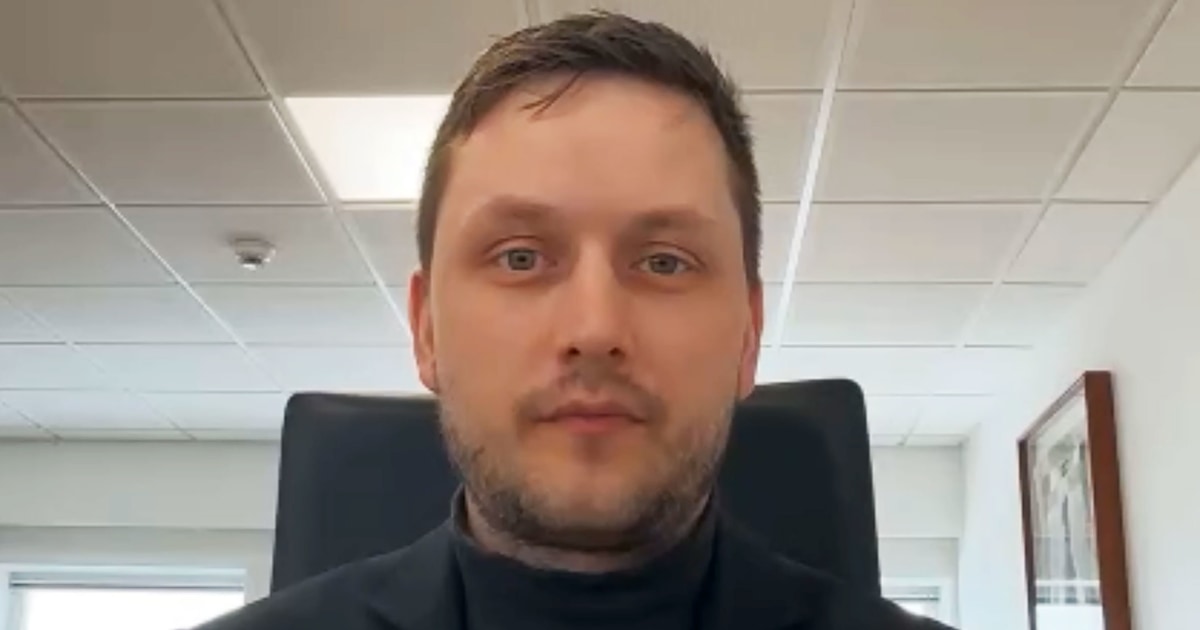
Greenlandic Prime Minister Jens-Frederik Nielsen said in an interview with NBC News that many Greenlanders “don’t feel safe” amid President Donald Trump’s repeated push to take control of the semi-autonomous Danish territory.
Subscribe to read this story ad-free
Get unlimited access to ad-free articles and exclusive content.

Trump’s Truth Social posts and rhetoric targeting Greenland are “an unacceptable pressure to put on the Greenlandic people, when the biggest power in the world and the leader of that is threatening the Greenlandic people,” Nielsen said.
“A lot of people don’t feel safe,” he said, adding, “Some have been scared. Now it’s turning into — for a lot — turning into anger.”
Since taking office, Trump has pushed for the U.S. to take control of Greenland, initially suggesting his administration could do so by force, despite being repeatedly rebuffed by Greenlandic and Danish authorities. The president later focused on negotiations to expand the U.S. military presence on the territory. His rhetoric has alarmed critics, who worry his focus on Greenland is damaging the United States’ standing with allies.
Last week, Trump referred to Greenland in a post criticizing the North Atlantic Treaty Organization for the unwillingness of key members to become involved in the war with Iran.
“NATO wasn’t there when we needed them, and they won’t be there if we need them again,” Trump wrote in all capital letters on Truth Social. “Remember Greenland, that big, poorly run, piece of ice!!!”
Nielsen, 34, said in response that “we have not been naive.”
“We know there is some sort of desire to own or to control Greenland, and even though he has taken something off the table, in terms of invasion and so on, he has never been taking that desire to own or control Greenland off the table,” the prime minister told NBC News. “So we are not naive. We know that it’s still there.”
Trump has argued that obtaining Greenland is necessary for U.S. and allied security, effectively providing a strategic buffer against Russia and China. The U.S. has the right to build and operate military bases on the territory under a 1951 defense agreement with Denmark, but Trump has been pushing to expand on that pact. Last month, Gen. Gregory Guillot, the head of U.S. Northern Command, testified to the Senate that the U.S. military is seeking to establish an expanded presence on the island.
The fears of Greenlanders’ over any U.S. attempt to control the island come as Trump has shown an increased willingness to use the military abroad. Before the Iran war began, the U.S. military captured Venezuelan President Nicolás Maduro in a bold, nighttime operation in Caracas. Maduro was then taken to New York to face narcoterrorism and drug-trafficking charges, to which he has pleaded not guilty.
Asked whether he ever believed that Greenland could be next after Venezuela, Nielsen said “of course.”
“The Greenlandic people, a lot of them thought that way: We might be next,” he said. “And I know other countries also think like that, and that’s just so unfortunate.”
Amid the heightened fears of a U.S. takeover, Nielsen detailed to NBC News how Greenlanders altered their daily lives.
“When this was at its worst, people were afraid to leave their kids in the kindergarten,” he said. “That’s just one example. People who had planned parties or gatherings, they just cancelled those.”
Nielsen added that that Greenland, Denmark and the U.S. have “an ongoing dialogue in a high-level working group,” but that “there is no deal,” adding that the 1951 pact is the only agreement governing U.S. conduct on the island. The prime minister added that Greenland has “from the beginning said that we are ready to a better partnership and do more together, but we have our red lines, it has to be in mutual respect and without threats.”
Asked later about the red lines, the prime minister emphasized that Greenland “cannot give areas of our country away.”
“We will not give away parts of our country or the whole country or sell parts of our country, or sell our country to anyone else,” he said. “That’s ours.”
At the same time, Nielsen said that Greenland is “ready to have a wider and stronger and bigger and better partnership,” adding that such cooperation needed to be “in mutual respect.”
In January, Trump declined to say whether the U.S. could use force to take over Greenland, but later said military intervention was “not on the table.”
The prime minister declined to confirm reports that Danish soldiers were sent to Greenland with explosives to prepare to potentially blow up runways if the U.S. decided to invade. He said that Greenland’s government had urged residents to be prepared for any possibility, including putting aside enough food, water, warm clothes and additional necessities to live for five days.
“If they do something about our infrastructure, we, of course, need to be ready,” he said, explaining of the reasoning behind the such plans.
Trump’s overtures have also intensified concerns about the U.S. relationship with NATO because Denmark is a member of the alliance. The president has repeatedly bashed NATO allies for not helping the U.S. with military operations in Iran and efforts to secure the Strait of Hormuz.
NATO’s Article Five resolution, which stipulates that an attack against one NATO country is considered an attack against all members, has only been invoked once, in defense of the U.S. after the Sept. 11, 2001 terrorist attacks.
Asked whether NATO has provided assurances that allies would fight the U.S. to defend Greenland if necessary, Nielsen demurred.
“I don’t know if NATO would give assurances to fight for us against another ally,” he said. “Look, we are all allies still.”