Africa 50C heatwaves becoming so unbearable even camels are dying | World | News

The hardy desert animals are suffering from blisters and burns and are dying in worrying numbers (Image: Getty)
For generations, desert herders have relied on camels to survive the harshest conditions on Earth. Now, rising temperatures are threatening the very animals built to withstand them.
With African summer temperatures frequently topping 50C, camel herders across the continent are warning that extreme heat is causing widespread illness, foot blisters and rising mortality rates among their stock. In Ethiopia’s scorching Afar region, 40-year-old camel herder Ali Umer said: “I can see my camels suffering from extreme heat. “They get blisters on their feet, their eyes become watery, and the hot sand burns their skin and eats up their hair when they sit.”

North Africa warmed at a blistering 0.43C per decade between 1991 and 2025 (Image: Getty)
“Even the wind, which used to bring cool air, now carries heat. Within the past month alone, I have lost eight camel calves because of the extreme heat,” he added, according to the BBC.
The crisis is ripping through North Africa and the Horn of Africa, home to roughly 80% of the world’s single-humped dromedaries. For generations, pastoralists turned to camels as the ultimate drought-proof livestock. Now, even these desert powerhouses are failing to cope.
The toll on local communities is catastrophic. In Somalia, recent research revealed that drought-related camel deaths are impacting nearly 46% of camel-owning households. In the northern Sool region, mortality rates reached a staggering 73%. Meanwhile, in Kenya, in the Marsabit county, local vets have reported a 15% surge in camel deaths over the last two years alone due to hyperthermia and rapid infection rates.
According to the World Meteorological Organization (WMO), North Africa warmed at a blistering 0.43C per decade between 1991 and 2025 – the fastest rate on the continent – with multiple nations regularly breaking the 50C barrier.

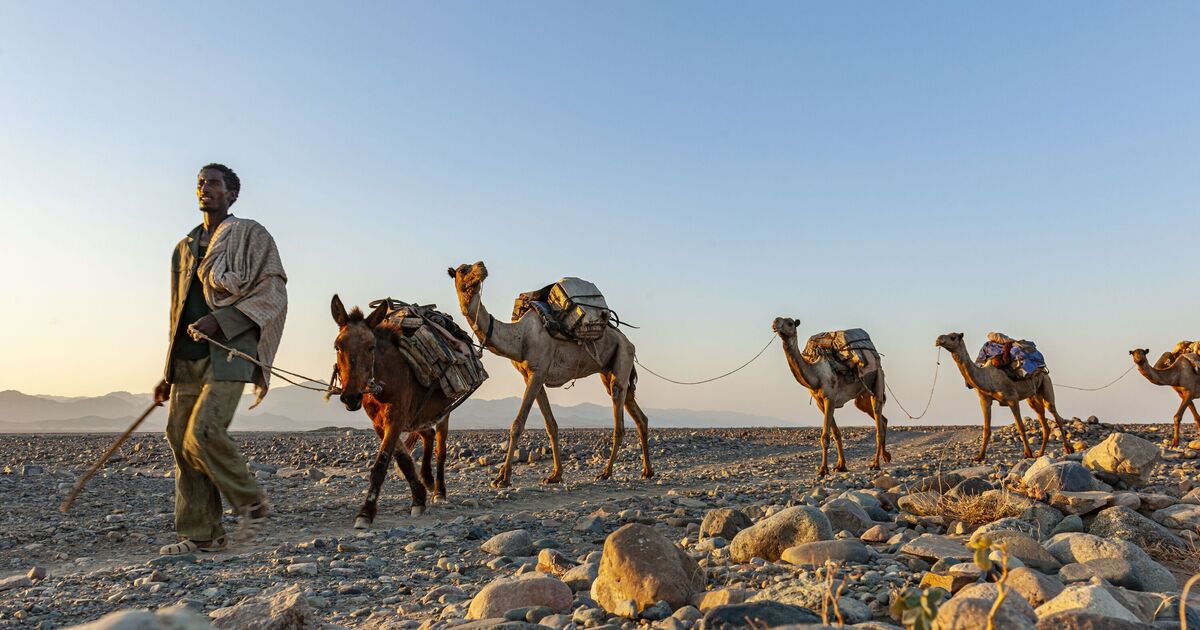
The Danakil Depression in northeastern Ethiopia is one of the driest and hottest places on Earth (Image: Getty)
While camels naturally regulate their body temperature to comfortably handle heat up to 40C, experts have warned that lengthy exposure to extreme temperatures destroys them at a cellular level.
“Prolonged day-and-night heat above 41C to 45C directly attacks their cells,” Professor Abdelmadjid Chehma of the University of Ghardaia said. “Their immune system suffers… cells struggle to repair themselves and end up destroying themselves.”
When extreme heat stress sets in, a camel’s metabolism plummets to limit internal body heat, triggering severe lethargy and causing the animal to stop eating, which quickly leads to muscle loss and weight loss. This appetite collapse causes milk yields to crash – devastating the pastoral communities that rely on the livestock for survival – while the physical toll frequently escalates into kidney failure, parasite outbreaks and deadly infections.
The crisis has become so severe that Ethiopian pastoralists are abandoning their historic northern grazing lands, migrating south in a desperate search for shade and water. With water prices in parts of Somalia exploding by over 2,000%, time is running out.
As Professor Chehma warned: “While camels remain the livestock herders’ last line of defence against the desert, the unprecedented intensity of current heatwaves directly threatens their vital functions – turning this historically resilient animal into a climate victim.”