Alexander Zverev admits injecting himself with needles at Wimbledon | Tennis | Sport
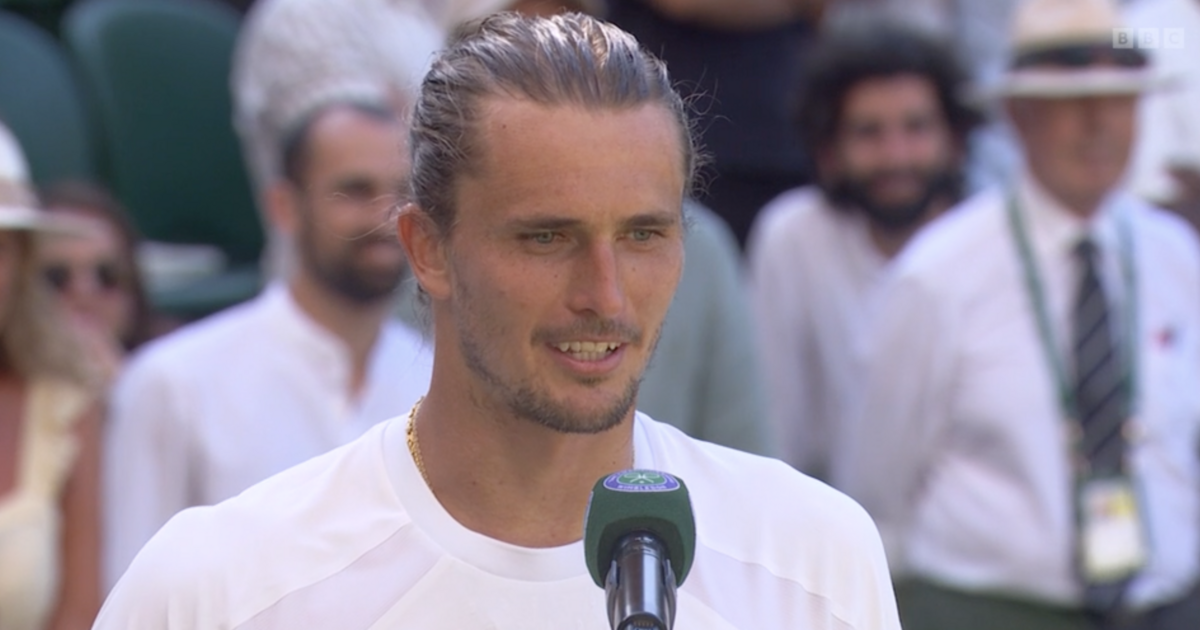
French Open champion Alexander Zverev has opened up about injecting himself with needles on court after doing so in his third round win at Wimbledon. Zverev has Type 1 diabetes, for which he requires insulin injections, and previously took aim at officials for refusing to allow him to take those injections on court. After his latest victory, he spoke about how his visibility has made a difference to others living with the condition. “I do it on court. I think everybody sees it. I did it today, as well,” said the 29-year-old, who beat Marcos Giron in straight sets to advance to round four.
“I’ve said it many times. I have a foundation for kids with diabetes. I was once a kid who just got diagnosed with diabetes. I had parents whose kid got diagnosed with diabetes 20-plus years ago,” he added. “If we as a foundation, and me just as a tennis player and somebody who has diabetes, can help even just a single kid or a single parent, I’ll be the happiest person in the world.”
Zverev, the No.2 seed, continued: “Of course, I think I’m not the only one. I think there’s a lot of great role models with diabetes these days. I think there’s a lot of great athletes, there’s a lot of actors, musicians, who have diabetes.
“I think it shows that, yeah, with diabetes there shouldn’t be any limits. You can always dream about the biggest things in the world, and really achieve them.”
He was speaking after a relatively routine win over Giron which ensured he has still only dropped one set all tournament. Next up for him is a meeting with 13th seed Jiri Lehecka, with the winner progressing to the quarter-finals.
Zverev was also asked about the reception he has received from fans as he continues to raise diabetes awareness. “Yeah, of course. That’s what the foundation is also about,” he said. “Again, we are very close contact with a lot of parents. We’re very close contact also with a lot of hospitals, programs where a lot of times – and I was also one of those kids.
“Kids with diabetes, they’re not allowed to go on school trips where you have to sleep over because teachers don’t want to take the responsibility. So we organize a lot of replacements for those kids where they’re guided with people who know what diabetes is. So yeah, we hear a lot about that.
“For me, the biggest part about – sorry, I mean, that was your question so I’m just going to talk. The biggest part about my foundation is that unfortunately not every country in this world is as well-developed as Europe or the United Kingdom, America, all of that. A lot of times a lot of places in the world or regions in the world, when a kid gets diabetes, he doesn’t survive this illness for longer than a couple of days.
“We’re able to provide more than 1,200 kids with medicine and the necessary tools to survive with diabetes already a year, so that’s the thing I think I’m the most proud of.”