Backrooms is at the forefront of horror’s YouTube wave
Though YouTube has always been a place where up-and-coming artists could be discovered and make it big, in recent years the platform has become a launching pad for some of Hollywood’s most exciting new horror directors. The filmmakers behind films like Talk to Me, Iron Lung, and Obsession all started off as content creators posting their independently created projects online. And if it weren’t for their fandom-fueled internet fame, studios might not have given them a chance to step up to the big leagues.
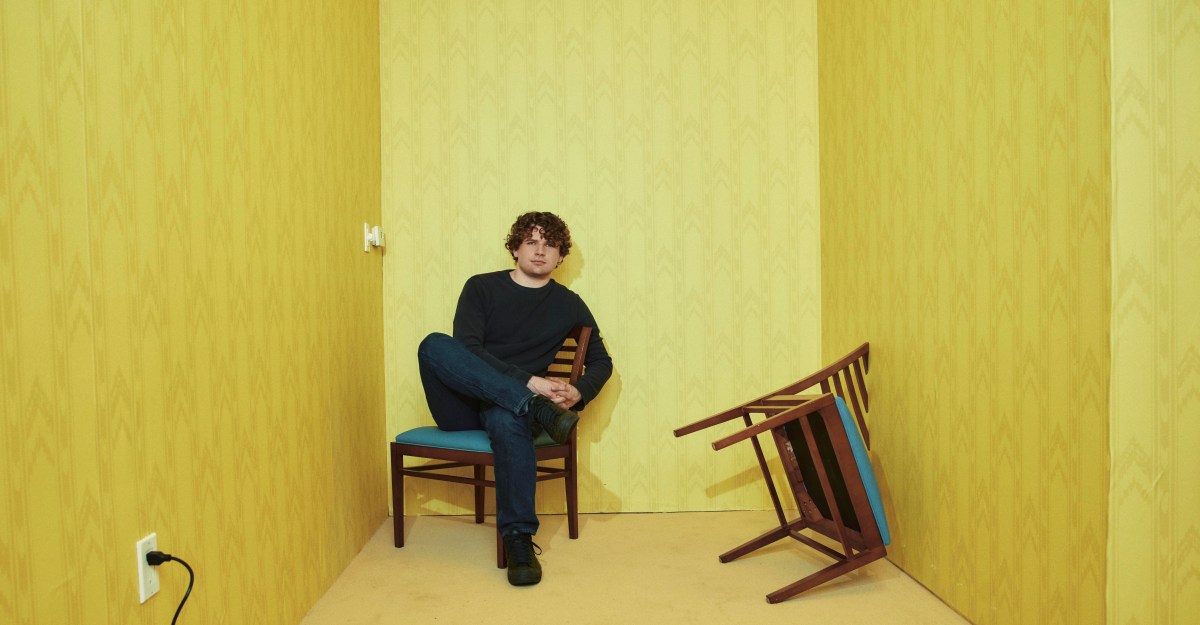
Going viral on YouTube with a series of videos inspired by 4chan memes is what put Kane Parsons on A24’s radar and led to him becoming the director of the studio’s latest movie, Backrooms. Everything about Backrooms — from its unsettling aesthetic to the way its script (written by Will Soodik) leaves you in the dark about what’s really going on — feels emblematic of this new generation of horror auteurs who grew up and found their creative voices on sites like YouTube.
During a recent conversation, Parsons told me that one of the most challenging things about bringing Backrooms to the big screen was embracing the fact that he needed to tell a story that could resonate with people who haven’t been following his work from day one. Though Parsons knew that longtime fans might show up expecting a deep dive into intricate Backrooms lore, his time on YouTube taught him that playing solely to that crowd can be a double-edged sword.
“With films like Backrooms that started off as YouTube projects, you have to really reflect on what worked in the first place in order to avoid making something that’s too contrived and dense for newcomers to enjoy,” Parsons explained. “That inaccessibility issue stems from the fact that so many of these projects are independently developed and largely controlled by individual people. You frequently see the ways in which creators can let online engagement affect them personally and affect the way they make things.”
Like Parsons’ shorts — there are 22 of them, and the first was uploaded in 2022 — Backrooms tells the disturbing story of what happens when people unknowingly stumble into an extradimensional space that looks like a sprawling maze of seemingly abandoned office building hallways. After a furniture salesman (Chiwetel Ejiofor) discovers a portal to the Backrooms beneath his failing store, he becomes obsessed with figuring out what the place is and why it’s filled with objects that appear to be human-made. But the more time the man spends in the place, the more his grasp on reality starts to slip.
“I wanted to make sure I was replicating what worked about that first short.”
Like a lot of other recent theatrical horrors, Backrooms could be fairly described as a vibe-forward sort of film that puts more emphasis on conjuring a discomfiting atmosphere as opposed to giving you a clear understanding of what’s happening to its characters. That mode of storytelling works especially well for short-form YouTube videos that viewers can pause, rewind, and pore over in excited anticipation of a creator’s next upload. But Parsons felt that it was important for the film to have a stronger and more concrete narrative center in order for it to work for theatergoers.
“Emotionally, I started from a place of wanting to capture what the Backrooms are while making sure that I wasn’t overwhelming the audience by showing them all of the various Backrooms biomes you see in my series,” Parsons said. “People who have watched all of my Backrooms videos are fine if I want to do a whole video where you don’t see any yellow wallpaper because they already have a larger understanding of the space. But for the film, I wanted to make sure I was returning to form and replicating what worked about that first short.”
The reasoning behind studios’ decisions to greenlight projects like Backrooms is simple enough to understand. Horror films tend to be cheap to produce, and if they wind up being hits, studios can easily recoup their production costs many times over (Backrooms reportedly cost $10 million to make and is on track to rake in $45 million in its first weekend.) When young filmmakers show up with sizable, built-in fan bases, executives see them as safer bets. A combination of those factors is what led to A24 bringing Parsons on board, and the studio is clearly hoping that Backrooms will become another testament to low-budget horror’s ability to dominate at the box office.
Before Backrooms, Danny and Michael Philippou’s first Talk to Me film (a sequel, Talk 2 Me, is currently in development) ultimately made just under $92 million against a $4.5 million micro-budget, while Mark “Markiplier” Fischbach’s independently produced Iron Lung — an adaptation of David Szymanski’s 2022 video game — netted an impressive $50 million while holding its own against more expensive features like Sam Raimi’s Send Help. These films are making a mark during a booming time for the genre, where the likes of Ti West’s X series, Longlegs, and Weapons have made it clear that audiences will flock to see low-budget horror.
“The YouTube algorithm is not your friend.”
Though Parsons knows that his YouTube fame is part of what helped him get his foot in the door, growing up in the age of content creators taught him how important it is to maintain a certain level of distance from online discourse about his work. Before Parsons was making videos of his own, he was a subscriber to channels like The Film Theorists, which gave him a deep understanding of how fans’ intensity can be a blessing and a curse for the creators they fixate on.
“My entire experience with the internet has been channels where people put so much energy into media analysis in a very decentralized, scattered way,” Parsons said. “And when you have tons of people who hang on the tiniest details in your story, it can end up creating and reinforcing an unhealthy feedback loop where a creator feels the need to disproportionately cater to their fans because that’s where the positive feedback is coming from.”

While the obsessive energy that defines so much of modern fandom often gives Parsons pause, he still feels YouTube is a place where aspiring artists can find their voices and hone their craft. Some of “the most talented artists” Parsons knows are “random people from Discord who are, like, 14-year-olds who are not working in the industry at all, but they’re fucking wizards.” Parsons believes that the entertainment industry would deeply benefit from capitalizing on more of that youthful wizardry, but he also told me that he refuses to “preach the blind optimism that I hear from a lot of other filmmakers who say, ‘You got a phone; everyone can be a filmmaker now.’” YouTube remains an important platform for being discovered, but it’s also becoming increasingly challenging to get noticed.
“About 50 percent of the internet traffic is now not even human, but that doesn’t change the fact that we’re all still here and I don’t think people are fully dropping off the internet,” Parsons said. “But the YouTube algorithm is not your friend. These platforms are increasingly becoming more and more botted, atomized, and just not user-friendly, and I think it would be very dishonest to claim otherwise.”
Backrooms is in theaters now.