BBC and ITV pundits and England picks compared for World Cup 2026 | Football | Sport

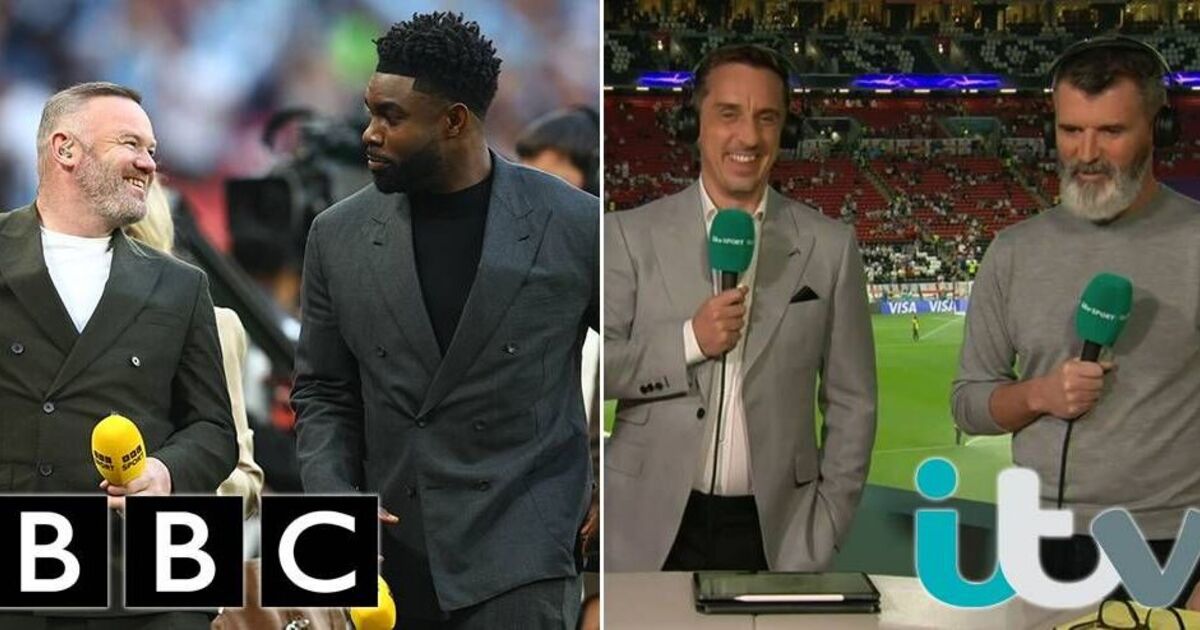
The BBC and ITV will go head-to-head at this summer’s World Cup (Image: GETTY/ITV)
The World Cup is almost upon us and while 48 nations gear up to battle it out on the pitch, viewers at home will have their own contest to enjoy on screen. As always, the tournament will be broadcast across the BBC and ITV. With vast audiences up for grabs and their coverage set to be scrutinised side-by-side, the pressure is on as the two broadcasters reignite their long-standing rivalry.
This year’s World Cup is the biggest edition of the tournament ever staged, with 104 matches taking place across the United States, Canada and Mexico between June 11 and July 19. That has thrown up a host of logistical headaches for the terrestrial broadcasters, who must pull out all the stops for England‘s prime time fixtures while also covering graveyard shift kick-offs between the likes of South Korea and the Czech Republic.
While both broadcasters share a number of similarities in their approach, there are also some striking differences. Here’s a breakdown of the battle between the two broadcasting heavyweights…
The BBC’s coverage will be led by four well-known faces: Kelly Cates, Mark Chapman, Gabby Logan and Alex Scott.
Their English pundits include Alan Shearer, Wayne Rooney, Micah Richards, Joe Hart, Paul Robinson, Steph Houghton, Ellen White and Danny Murphy.
They have also brought on board Olivier Giroud, Gael Clichy, Cesar Azpilicueta, Benni McCarthy, Ashley Williams and Thomas Frank.
ITV’s coverage is fronted by Mark Pougatch, Laura Woods and Semra Hunter, but the broadcaster has sprung a surprise by enlisting Adam Richman, of Man vs Food fame, as one of their studio presenters.
It is a bold point of difference – and undeniably a risk – which will, according to the press release, “bring his unique broadcasting perspective” alongside celebrity guests. It threatens to alienate a portion of the viewing public.
ITV’s punditry panel comprises Roy Keane, Ian Wright, Gary Neville, Patrick Vieira, Karen Carney, Ange Postecoglou, Juan Mata, Emma Hayes, Duncan Ferguson, Jobi McAnuff and Bradley Wright-Phillips.
While the BBC will call upon former Premier League official Darren Cann to shed light on key decisions, Christina Unkel will fulfil the role of ITV’s analyst.
On the commentary front, the BBC deploys Guy Mowbray, Steve Wilson, Steve Bower, Jonathan Pearce, Robyn Cowen, Steven Wyeth and Liam McLeod, supported by co-commentators Shearer, Murphy, Robinson, Stephen Warnock, Efan Ekoku, Martin Keown, Sue Smith, Rachel Corsie and James McFadden.
ITV are headed up by Sam Matterface, Jon Champion, Seb Hutchinson and Joe Speight, with co-commentary duties handled by Lee Dixon, Ally McCoist, Andros Townsend and Lucy Ward.

Ian Wright, Gary Neville and Roy Keane will join forces on ITV (Image: ITV)
The most significant difference viewers will notice after tuning in relates to location.
While ITV have invested their larger budget in a Brooklyn studio, complete with a Manhattan skyline backdrop, the BBC will predominantly operate from Salford, Manchester. ITV plan to capitalise on their New York base by deploying Keane, Wright and Neville to produce social media content.
The BBC are remaining in the UK until the competition’s later stages, when a crew will travel to North America, meaning they’ll need to be more creative in delivering the much-discussed World Cup atmosphere to their audience.
“I think there are many, many good reasons why you would stay in one place in the UK, in terms of sustainability of the event,” BBC presenter Logan said last month in defence of the condition.
“It doesn’t cost as much. We have to think about that, and the belt is being tightened all the time with the licence fee.”
As part of BBC Sport director Alex Kay-Jelski’s strategy to attract a younger demographic, the broadcaster will attempt to compensate for their location disadvantage by embracing YouTube and TikTok.
“Hopefully something for everyone in here whether you like pundit opinions, journalism, tactics or the light-hearted stuff,” Kay-Jelski wrote on LinkedIn.

Gabby Logan is expected to present the BBC’s live coverage of the final (Image: Visionhaus, Visionhaus/Getty Images)
In total, the BBC holds rights to 54 matches compared to ITV’s 51, though England’s opening fixture against Croatia on June 17, which kicks off at 9pm, will be broadcast on ITV.
The Three Lions’ final Group L encounter against Panama is also on ITV, with the BBC opting instead to prioritise potential knockout stages, including the last-32 and last-16 ties.
The BBC has also secured the pick of the semi-finals, while ITV holds three quarter-finals.
Both broadcasters will air the final on July 19, though the outcome of that particular ratings battle is something of a foregone conclusion.
The 2022 World Cup final between Argentina and France drew nearly 20 million viewers across the UK: 14.9m tuned in on the BBC, with just 4.3m opting for ITV.
It remains to be seen whether ITV’s bold move to base their team in New York will make any dent in the BBC’s commanding grip on the ratings.
Get the latest World Cup news straight to your inbox by signing up to our Make Football Great Again newsletter now!