Chilling question before tourist killed by huge 15-foot crocodile | World | News

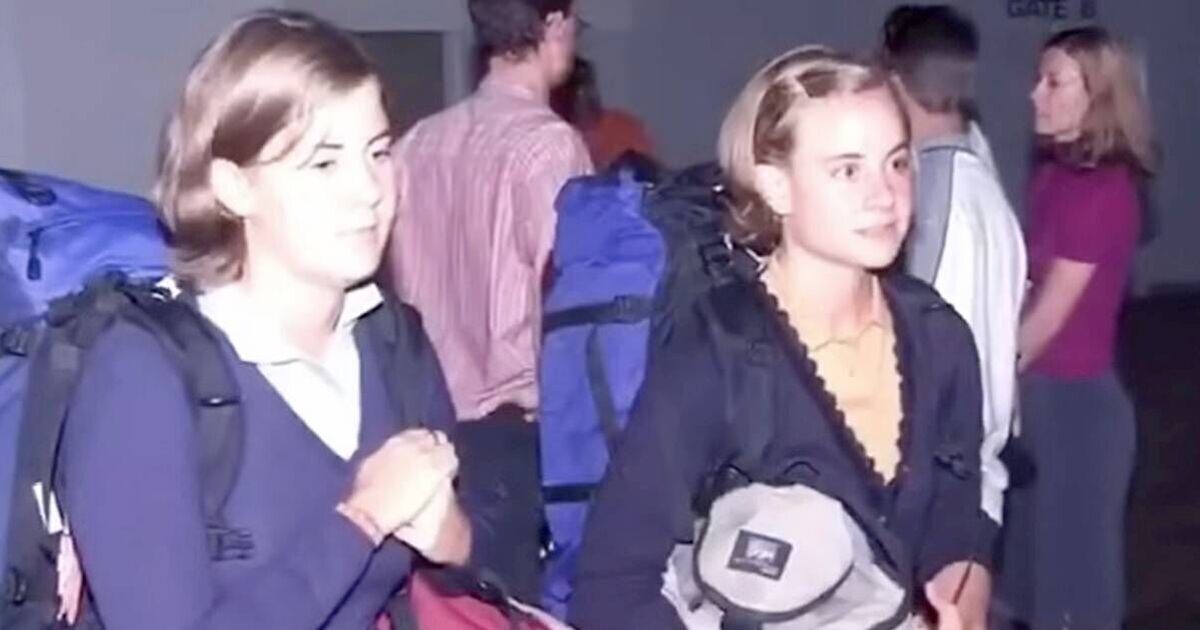
Isabel von Jordan was on a trip with her sister, Valerie (Image: Supplied)
When Isabel von Jordan embarked on a celebratory trip with her sister to mark her recent graduation, the last thing she could have anticipated was meeting a tragic end.
The 23-year-old from Germany had just completed a degree in interior design at the Technical University of Munich and brought along her younger sister, Valerie, 21, to discover Australia in October 2002.
The adventure included a journey through Kakadu National Park, where the pair joined a group of fellow international tourists, all under the supervision of Glenn Robless, a tour operator from Darwin with considerable expertise.
On the final evening of the tour, the party of seven made camp near a waterhole known as Sandy Billabong.
It was then that, despite warning signs displayed in several languages throughout the area, Robless informed the group that the nearby waters were safe for swimming, reports the Daily Star.

Saltwater crocodiles are native to the region and inhabit the local waters (Image: Getty)
Saltwater crocodiles are widespread throughout the park, yet the guide had scanned the surface with a torch – looking for any sign of danger – spotted nothing, and had reportedly taken note of a pile of mussel shells on the bank, most likely suggesting the presence of Aboriginal people in the water earlier that day.
It is understood at least one member of the group challenged him on more than one occasion regarding the instructions, but was given reassurances that it was perfectly safe.
The group spent a brief time enjoying the water before Robless left them to make contact with another guide, according to details revealed at the inquest. When left unattended, the group was oblivious to the fact that a crocodile had begun swimming among them.
They only realised something was terribly wrong later, when they discovered Isabel had disappeared beneath the water. In a state of panic, they all rushed back to the shoreline and frantically searched the waters from above, but to no avail.

The group was on an extended tour of Kakadu National Park, in Australia (Image: Supplied)
One of the surviving tourists subsequently recalled sensing something brush against her leg moments before, initially thinking it was someone messing about.
The group raised the alarm, and park rangers travelled along the Creek by boat, eventually finding and killing the 4.2-metre-long, 400-kg crocodile they suspected had attacked Isabel.
Following an overnight search operation carried out by emergency services, Isabel’s body was discovered the following morning on a tributary of the South Alligator River, approximately two kilometres from where she’d disappeared.
The woman had been pulled underwater and, contrary to initial assumptions, hadn’t died from the crocodile’s bite, but rather from drowning.
One park ranger who took part in the search put forward a theory during the inquest, suggesting that the creature may have been attracted to her size, though he was cautious about presenting it as a confirmed fact, given that crocodile behaviour, especially what prompts an attack, is notoriously unpredictable.
The investigation determined Robless was guilty of a manslaughter charge, though this was subsequently downgraded to causing death by dangerous omission. He entered a guilty plea in 2003 and was handed a three-year suspended sentence.
The coroner’s report, published in January 2005, concluded that Robless bore direct responsibility for the welfare of a group who were unaware that saltwater crocodiles were frequently found in the park’s waterways.
The coroner described the decision to allow the group to swim as inexplicable and indefensible, branding it grossly negligent.