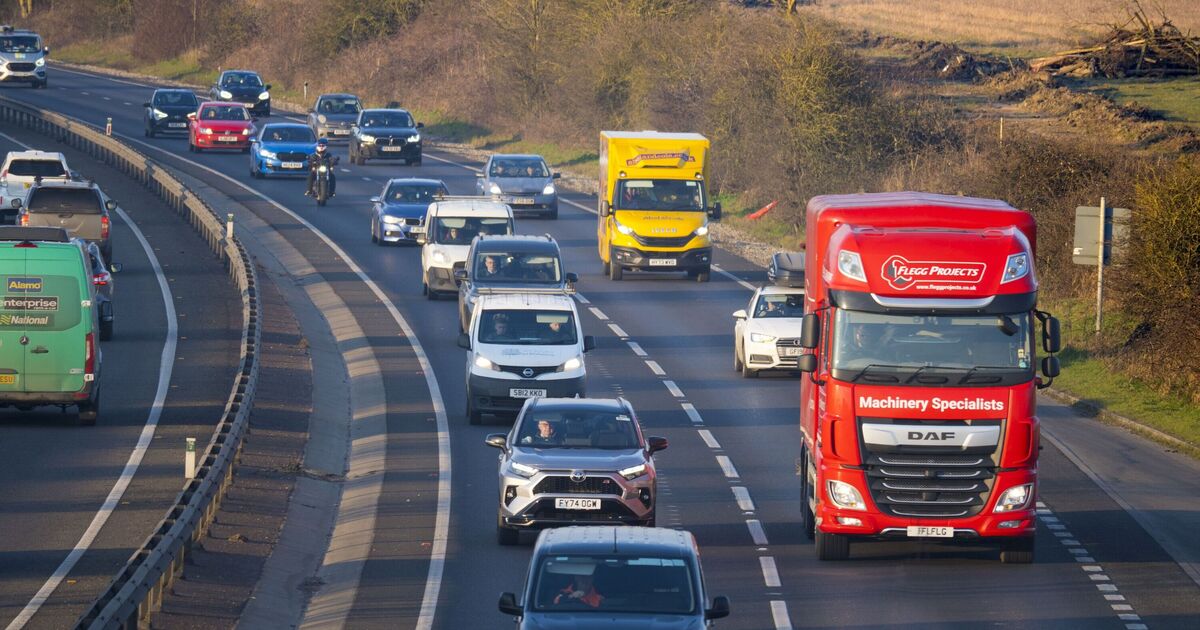
DVSA increases maximum MOT service charges for drivers from July 6

Vehicles including HGVs will see MOT prices rise next month (Image: Getty)
Motorists could soon find themselves facing higher costs when taking their vehicles for an MOT test, as the DVSA prepares to raise the maximum service charge.
The Driver and Vehicle Standards Agency (DVSA) has confirmed that revised charges will be introduced within weeks, following a formal consultation process.
It put forward increases to the amounts that MOT centres handling heavy goods vehicles, buses, coaches and trailers can levy on customers for the use of their facilities.
The consultation, which ran between September 25 and November 21 last year, revealed that 99 per cent of authorised testing facilities (ATFs) were in favour of raising the maximum service charge.
Maximum service charges are the rates that ATFs are permitted to charge customers for using their facilities. The new maximum charges take effect on 6 July 2026.
A further 95 per cent of respondents who were both vehicle operators and ATFs backed the proposals, although this figure fell to just 62 per cent amongst vehicle operators alone.
From July 6, 2026, the maximum service charge will increase to £70 for HGVs, £50 for trailers and £90 for buses and coaches.
The price rises represent an increase from current levels of £55 for HGVs, £40 for trailers and £70 for buses and coaches.
Nevertheless, these remain lower than they would be if the maximum service charge were uprated in line with CPI inflation. The DVSA confirmed the rise follows a consultation on HGV, bus and trailer MOT centre service charges, adding that the current maximum charges had not been increased since 2010.
Changes to maximum service charge.
Test type // Current maximum service charge // Maximum service charge if in line with inflation (CPI) // New maximum service charge //Average statutory test fee.
HGV // £55 // £85 // £70 // £114.
Trailer // £40 // £62 // £50 // £54.
Buses and coaches £70 // £108 // £90 // £116.m to make savings of up to 60 per cent on MOTs.
The agency calculated that the maximum rise in total test costs, including the DVSA statutory fee, would be 9% for HGVs, 11% for trailers and 11% for buses and coaches.
Had prices increased in line with inflation, vehicle operators would have been hit with costs of £85 for HGVs, £62 for trailers and £108 for buses and coaches.
The adjustments are being implemented to assist ATFs in covering their escalating costs and enable ATFs to plan for future testing equipment requirements.
The modification applies to the service charge imposed by Authorised Testing Facilities for providing testing premises and equipment. It is distinct from the statutory DVSA test fee.
Nevertheless, ATFs are not obliged to charge the maximum sum. Some may charge lower amounts, while others may impose no service charge under certain circumstances, for instance when testing their own vehicles or incorporating the test as part of a broader service package.
The Road Haulage Association cautioned during the consultation that even a 9–11% rise in total test costs could prove substantial for operators working on narrow margins, particularly smaller businesses.
The consultation acknowledged that the price modifications could also help keep the vehicle testing network sustainable.
It added that it would prove advantageous to the industry by p roviding extra capacity and choice for vehicle operators.
In total, 634 responses were gathered during the consultation, with the DVSA confirming that it would publish a more comprehensive summary of feedback as soon as possible.
There will be no changes to the maximum cost of an MOT for cars and motorcycles, which will remain at £54.85 and £29.65, respectively.
Earlier this year, the Department for Transport announced that electric vans weighing between 3.5 and 4.25 tonnes will transition to the Class 7 MOT testing regime.
This will enable electric vans to bypass additional bureaucracy and allow the