DWP Universal Credit May update as 46 per cent of claimants affected | Personal Finance | Finance

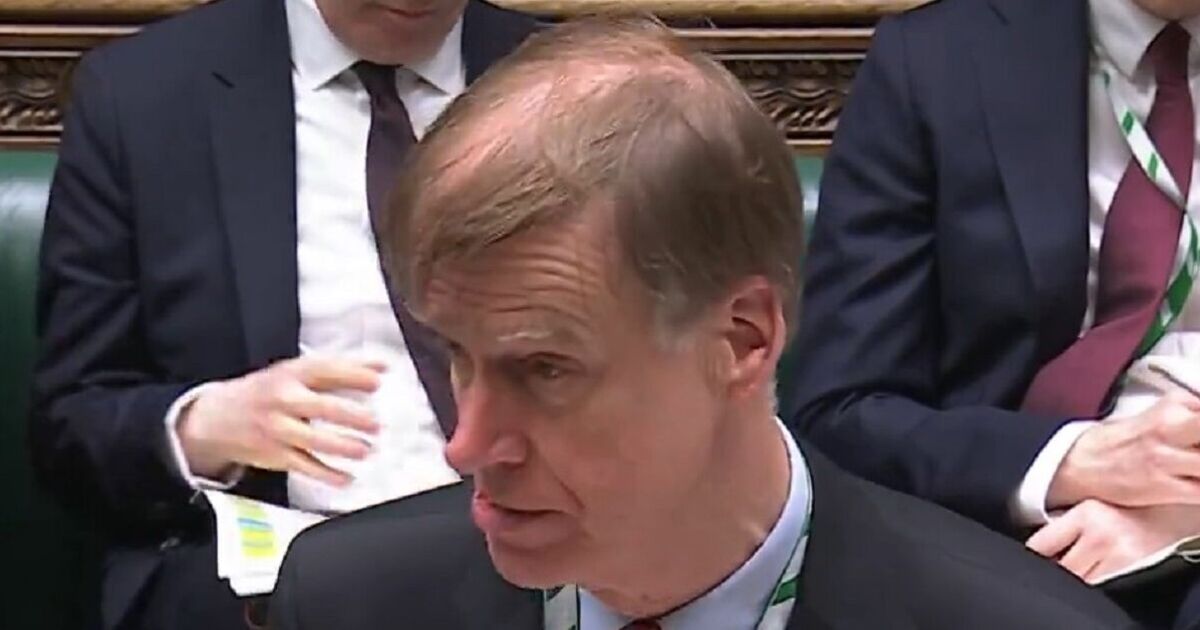
Sir Stephen Timms has shared an update with MPs on Universal Credit (Image: Parliament TV)
The rules around Universal Credit deductions are in the spotlight as more claimants have seen money deducted from their entitlement. New DWP figures reveal a total of 3.3 million households on Universal Credit had one or more deductions taken from their UC entitlement in February 2026, fresh data published this week confirms.
Nearly half – 46 per cent – of those receiving the benefit are facing deductions. And the figure has increased by 300,000 over the past year, the new report issued on May 12 says. For new claimants, the issue of deductions may not be something they are familiar with.
A “deduction” refers to a sum of money removed from the monthly UC entitlement amount to reduce a debt owed to the government or another organisation. Deductions are taken from the monthly UC entitlement after any adjustments have been applied to reflect the household’s financial circumstances, such as earnings.
There are three principal categories of deduction:
- Advances – deductions taken towards repaying a UC advance payment. The four types of UC advances are: new claim, benefit transfer, change of circumstances and budgeting
- Third Party Deductions (TPD) – deductions for money owed by the UC household to organisations such as energy suppliers or landlords
- Government Deductions – deductions for money owed to government organisations such as the DWP or HMRC
The sum deducted for each debt varies depending on the nature of the debt and the combination of debts owed by the household. In the majority of cases, the maximum amount that could be deducted from a UC household was capped at 25% of the monthly UC standard allowance prior to June 2025, reducing to 15% from June 2025 onwards (following the introduction of the Fair Repayment Rate in April 2025).
The explanation for the rise in deductions, according to DWP officials, is that more people are now claiming Universal Credit than 12 months ago. Claimants on so-called legacy benefits – namely Housing Benefit, income-related Employment and Support Allowance (ESA) and income-based Jobseeker’s Allowance (JSA) – are being transferred to Universal Credit as the government overhauls the welfare system.
According to homelessness charity Shelter, the maximum deductions from April 2026 vary according to individual circumstances. A single person under 25 faces a maximum deduction of £51 a month. For those aged over 25, that figure rises to a maximum of £64 a month.
The situation differs for couples. Where both partners are under 25, the cap stands at £79 a month. Should either partner be aged 25 or over, the limit increases to £100 a month.
Universal Credit deductions – priority order
The government states that deductions follow a strict priority order, beginning with advances, followed by third-party debts such as rent and utility arrears, then government debts including social fund loans and tax credit overpayments. Any deductions that would push the total above the overall cap are withheld until sufficient room exists within the cap. Consequently, for households carrying multiple debt types, deductions lower down the priority order are more likely to breach the cap and therefore go uncollected.
Rightsnet reported in 2023 that more than 2 million children are living in households with a Universal Credit deduction. It also said that over 900,000 households receiving universal credit are currently repaying a budgeting advance.
In an analysis published last year by Policy in Practice, the use of deductions came under fire. It noted: “Deductions for debt repayments and sanctions routinely reduce the amount households actually receive, undermining financial security and pushing many households deeper into hardship.”These deductions do more than lower income levels; they increase income volatility, making it harder for low income households to budget and plan ahead. This instability has far reaching consequences, particularly for housing affordability and the risk of homelessness.

New information on Universal Credit has been issued (Image: Getty)
“To truly understand the impact of Universal Credit on poverty and financial insecurity, policymakers must look beyond headline award rates and consider what people actually receive in practice.”
The Labour government has since moved to reduce the rate at which money can be recouped through deductions. Following Rachel Reeves‘ debut Budget in 2024, a so-called Fair Repayment Rate was brought in.
The government states that this places a cap on how much those in debt can have stripped from their benefits to settle what they owe. Previously, up to 25% of a person’s Universal Credit standard allowance could be deducted to repay debt – but from today that figure drops to 15%.
The gov.uk website stated when the measure was first introduced: “This will mean an average £420 extra a year for 1.2 million of the poorest households, including 700, 000 households with children, while helping people to pay down their debts in a sustainable way.
“It forms part of the Government’s Plan for Change to put more money into people’s pockets and boost living standards and marks the Government’s first step in a wider review of Universal Credit to ensure it is still doing its job.”Yet Policy in Practice said issues remained. It said: “This change won’t protect families from multiple cuts at once like the benefit cap, two child limit or bedroom tax.
“The Fair Repayment Rate is a step forward but it’s not enough. Our findings show that without urgent reform, sanctions and deductions will keep pushing families deeper into poverty.”
In a parliamentary response on July 4 2023, DWP minister Guy Opperman explained the delicate balancing act that officials must navigate when it comes to deductions. He said: “The Government recognises the importance of supporting the welfare of claimants who have incurred debt. We seek to balance recovery of debt against not causing hardship for claimants and their families. Processes are in place to ensure deductions are manageable, and customers can contact the DWP Debt Management Team if they are experiencing financial hardship, to discuss a reduction in their rate of repayment, or a temporary suspension, depending on their financial circumstances.”
The overall deduction cap can only be breached for ‘last resort deductions’, which include child maintenance payments, housing cost arrears (rent and or service charges) and gas and electricity arrears. This ensures child maintenance obligations are fulfilled, prevents eviction, and stops disconnection of vital utilities.
The matter of deductions was brought before Parliament by a senior Tory MP – the exchange is here. Shadow Chancellor Mel Stride submitted a question to the Department for Work and Pensions asking “what number of universal credit households in the most recent quarter for which data is available were subject to a deduction; and what proportion of these households were subject to the maximum percentage reduction of 15%.”
In his response, Sir Stephen Timms – Minister of State (Department for Work and Pensions) – stated simply that the requested information can be found in published Universal Credit deductions statistics.
The figures, published this week, reveal that 3.3 million UC households had one or more deductions taken from their UC entitlement in February 2026. This represents 300,000 additional households compared to March 2025. This rise is attributed to more households transitioning onto UC.
The share of all UC households with a deduction stood at approximately 46% in February 2026. This proportion has remained relatively consistent over the past 12 months.
The fresh information from the DWP also indicates that roughly 21% of UC households had deductions capped at 15% of their Universal Credit standard allowance, with a further 2% having deductions taken above the cap to assist with child maintenance payments, avoid eviction or prevent their energy supply being cut off in February 2026. The proportion of UC households with deductions capped at 15% has remained relatively steady since June 2025, when it rose following the introduction of the Fair Repayment Rate.