Foreign Office pulls UK staff from Iran as Trump ramps up attacks on Tehran | World | News

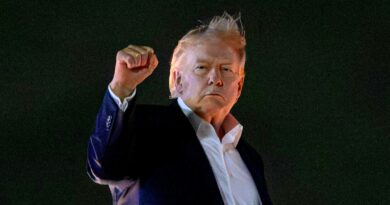
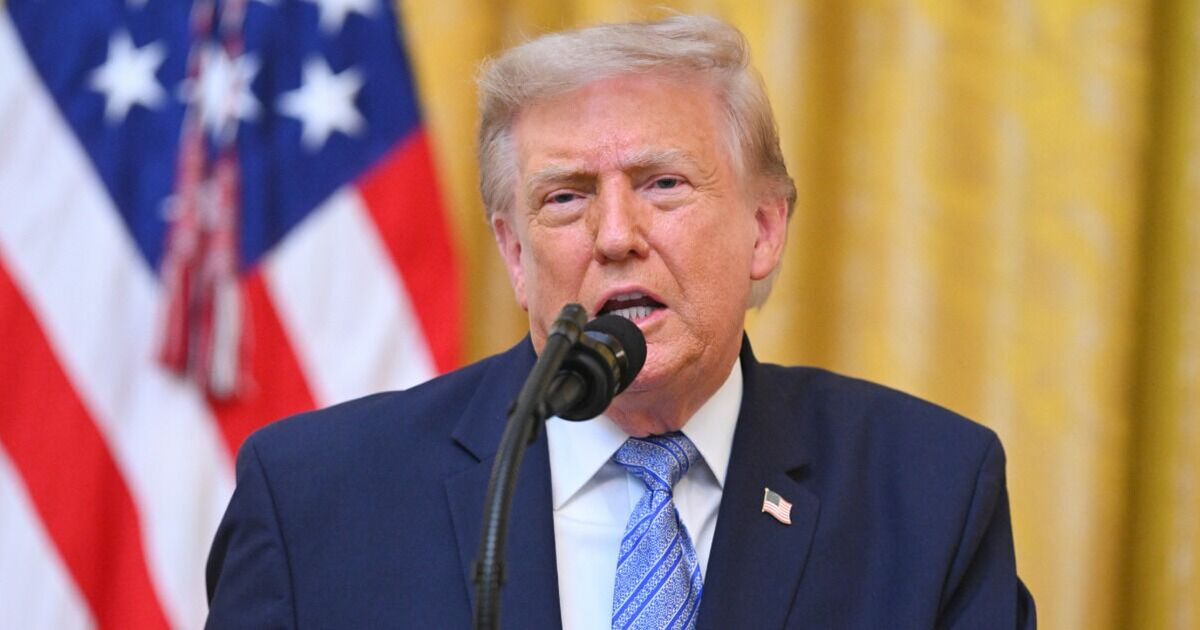
Donald Trump has ramped up the pressure on Iran over recent days (Image: GETTY)
The Foreign Office has temporarily withdrawn all remaining UK staff from Iran as Donald Trump’s war on Tehran escalates to alarming levels. Iran’s negotiating chief, Mohammad Bagher Ghalibaf, has warned that “the equation of this war is clear, all or nothing”, as the Foreign, Commonwealth and Development Office (FCDO) announced the withdrawal and said the British embassy would continue to operate remotely.
Ghalibaf added: “In a region where we do not sell oil, no one will sell oil. If our security is not guaranteed, no infrastructure will be safe, and the key to the security of the strait lies in the absence of American forces.” For 12 consecutive days, the US has carried out mass airstrikes across Iran as the conflict continues to intensify. British officials said the decision to withdraw UK staff had been taken because of the ongoing security situation, while warning that UK government support for Britons in Iran is “extremely limited”.
معادلهٔ این جنگ مشخص است: یا همه یا هیچکس!
در منطقهای که ما نفت نفروشیم، کسی نفت نخواهد فروخت. اگر امنیت ما تأمین نشود، هیچ زیرساختی ایمن نخواهد بود و امنیت تنگه در نبود نیروهای آمریکایی است. بارها گفتهایم که وضعیت تنگه به قبل از جنگ باز نمیگردد.
— محمدباقر قالیباف | MB Ghalibaf (@mb_ghalibaf) July 22, 2026
The FCDO said: “No face-to-face consular assistance will be possible in an emergency and the UK government will not be able to help you if you get into difficulty in Iran.
“Due to the ongoing security situation, we have taken the precautionary measure to temporarily withdraw UK staff from Iran. Our embassy continues to operate remotely.”
The Foreign Office continues to advise against all travel to Iran and has urged any British nationals already in the country, whether residents or visitors, to carefully consider their presence and the risks of remaining there.
On Tuesday, US bombers departed the UK, shortly after President Trump threatened fresh strikes on Iran’s Pickaxe Mountain nuclear facility.
British nationals across the Middle East are now being told to prepare for possible flight cancellations, periodic airspace closures and other travel disruption.
Those in the region are advised to stay away from areas around security or military facilities and keep their departure plans under review.
British and British-Iranian dual nationals in Iran also face a “very high risk” of arrest, detention and questioning.
The FCDO warned that simply holding a British passport or having perceived connections to the UK could be enough for the Iranian authorities to detain someone.
On Wednesday, President Trump threatened to destroy an Iranian bridge or power plant every time Tehran attacks a ship in the Strait of Hormuz, which came as Iran-backed Houthi rebels in Yemen threatened to block a second vital energy route through the Bab el-Mandeb Strait.
Five tankers also reportedly changed course in the Red Sea, while three carrying Saudi oil to China and India were forced to turn back.
Mediators have reportedly presented Iran with a proposal for a 10-day ceasefire aimed at reopening the Strait of Hormuz.
US Secretary of State Marco Rubio has accused Tehran of not being “serious” about negotiations however, warning Washington would otherwise do what was necessary to protect its interests and those of its allies.

A heavily damaged bridge connecting Roudan and Bandar Abbashit by a US strike in southern Iran (Image: ISNA/AFP via Getty Images)
Since July 8, there have been strikes and retaliatory attacks by Iran at a number of locations across the region against US military and civilian infrastructure.
Bahrain’s military reported Iranian strikes and warning of attacks targeting civilians, while early warning sirens also sounded in Dammam, eastern Saudi Arabia.
Jordan’s military said six Iranian missiles had entered its airspace this week, with four intercepted and two falling in remote areas.
British officials now warn there is a risk of further attacks and “unforeseen escalation” across the Middle East.