Horror as passenger falls ill with Ebola on flight to Europe | World | News

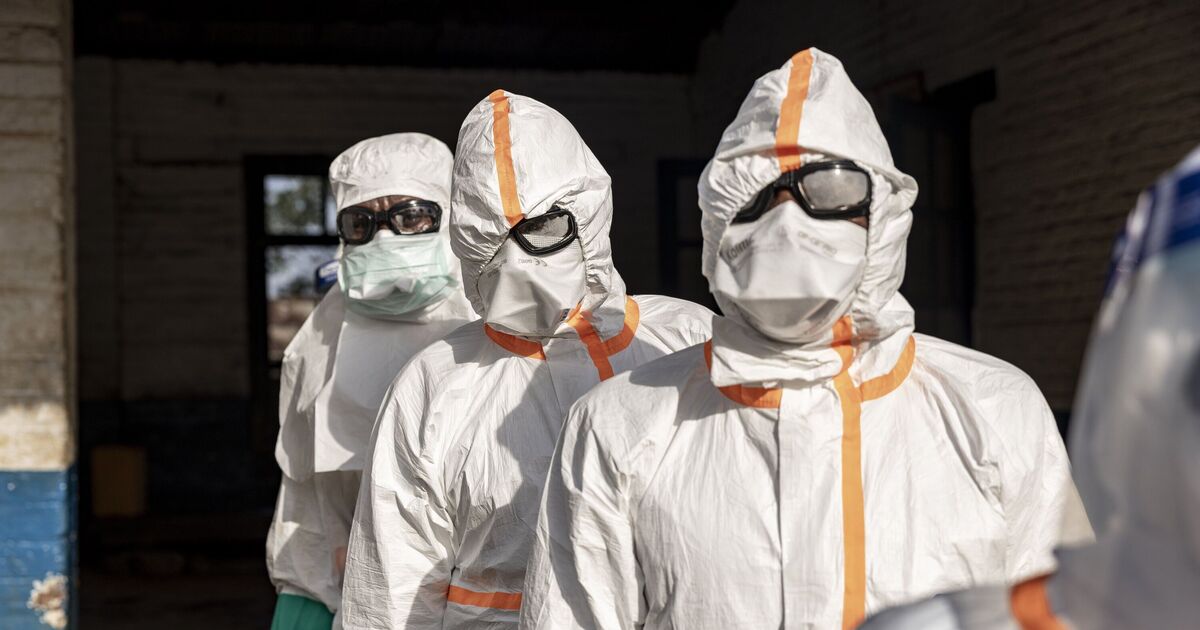
There has been an Ebla outbreak in Africa (Image: Getty)
A passenger fell ill with Ebola while on a flight to Europe. The confirmed case of the often fatal virus has sparked fears about cross-border transmission following an outbreak in the Democratic Republic of Congo (DRC) and Uganda.
The passenger, a humanitarian doctor from France, boarded a commercial flight home from Kinshasa, the capital of DRC, on Wednesday (June 24). However, he fell unwell mid-flight and was transferred to a specialist facility upon returning to France. It has been confirmed that he is in a stable condition and has become France’s first confirmed case of Ebola.
The DRC has since imposed a 21-day quarantine for anyone who has visited areas hit by the disease before they can travel abroad. They will be monitored every day and prohibited from travelling unless authorised by health authorities.
However, officials have reiterated that the risk to Europe is low. All outbound passengers, including healthcare workers and laboratory staff, are required to complete a health declaration at border control.
It comes following outbreaks in Africa, which the World Health Organisation (WHO) has declared a Public Health Emergency of International Concern (PHEIC).
In the DRC, eastern provinces such as Ituri, North Kivu and South Kivu have reported cases of the virus. A total of 1,118 cases and 291 deaths have been reported so far.

A total of 291 people have died from Ebola in the DRC (Image: Getty)
Meanwhile, 20 cases have been confirmed in Uganda. Most of these are reported to be “imported cases” from people crossing the border from the DRC.
As well as the reported case in France, an American national was also diagnosed with Ebola in Germany after working in the DRC. They have since been medically evacuated.
In the UK, no cases have been detected, with the UK Health Security Agency (UKHSA) introducing enhanced travel screening for passengers arriving from affected regions. Brits are also urged to consult a travel health specialist before visiting Ebola-affected regions.

It is the first confirmed case in France (Image: Getty)
What is Ebola?
Ebola is a rare but often fatal virus. It damages blood vessels, inflames tissues and disrupts the body’s ability to clot blood, which can lead to severe bleeding.
The virus is zoonotic, meaning it spreads to humans from wild animals. The primary natural hosts are believed to be fruit bats, as well as monkeys, chimpanzees, and forest antelopes.
Humans usually catch the virus by hunting, butchering, or handling infected wildlife. However, once infected, humans can spread Ebola through direct contact with broken skin as well as through body fluids.
Unlike the flu or COVID-19, Ebola does not spread through the air. Individuals are only contagious once they begin showing physical symptoms.
Symptoms typically appear suddenly between 2 and 21 days after exposure (averaging 8 to 10 days). Ebola then progresses through the early stage, consisting of fever, fatigue, headaches, and muscle aches, to the late stage, which includes diarrhoea, persistent vomiting, abdominal pain, and impaired kidney and liver function.
Patients may then suffer from bleeding from the gums, nose, or blood in their vomit and stools. This eventually culminates in organ failure and fatal shock from fluid loss.