‘I used to love charity shops – but £9bn app has now ruined them’

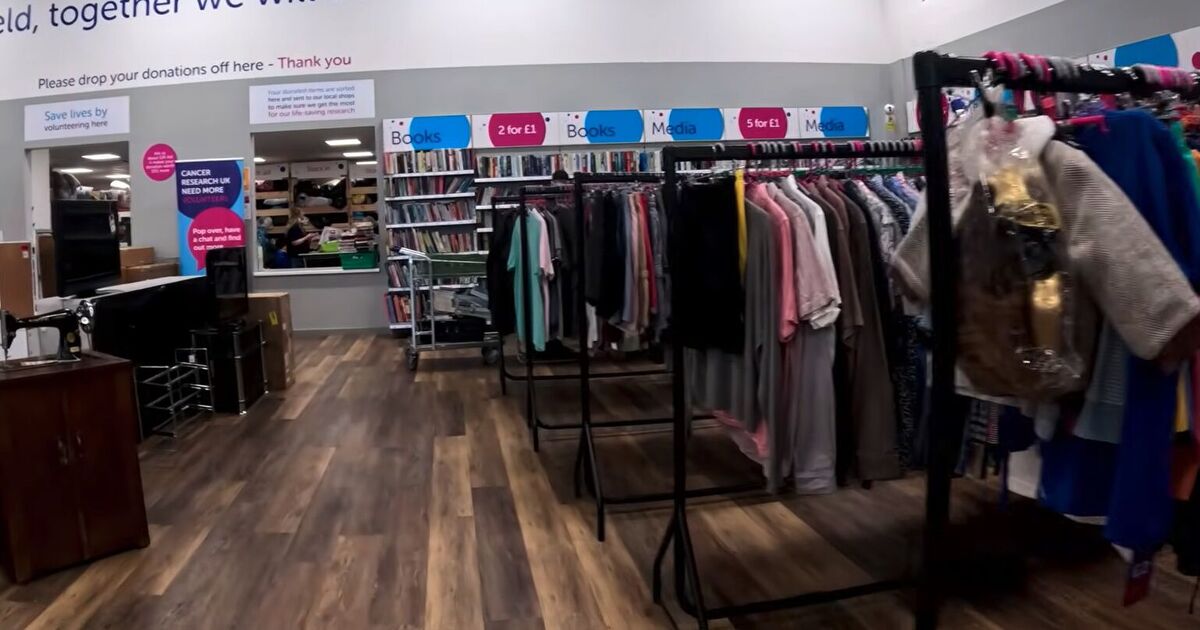
Charity shops have changed a great deal in recent years (Image: YouTube/PinkPeachFinds)
Plenty of charity shop regulars have pointed out that it has become harder and harder to find anything exciting in the stores nowadays. One YouTuber who has made a speciality of charity shop treasure-hunting claims the emergence of one particular smartphone application has destroyed any prospect of discovering a remarkable bargain on the high street.
Charlotte, who chronicles her charity shop exploits on her Pink Peach Finds channel, tells Wales Online: “I was a regular charity shop shopper long before Covid. What’s interesting is that I didn’t notice an immediate change once the lockdowns ended. Looking back, I’d say the biggest shift has really been over the last three or four years.
“I still visit charity shops most weeks but I definitely go with different expectations than I did even three or four years ago. Back then I’d expect to come across something really special most weeks. These days, that’s much rarer.”
In a new video, Charlotte explains: “For many, the rise of one platform has reshaped secondhand fashion. And according to thousands of comments under my videos, it’s reshaping charity shops, too.
“The good stuff never gets donated anymore. Everyone just sells online until one name kept appearing again and again. Vinted.”

Rails are now dominated by cheap fast fashion, Charlotte says (Image: YouTube/PinkPeachFinds)
Charlotte describes how the combined forces of the Covid pandemic and the continuing cost of living crisis transformed Vinted into a culture-altering phenomenon: “In 2022, around 4.8 million people visited Vinted each month in the UK. By 2024, that number had jumped to 11.4 million. Almost 1 in four adults online on Vinted every single month.
“And across Europe, Vinted became a giant. By 2026, the company was valued around 8 billion. And although Vinted doesn’t publish the number of active listings, analysts estimate the platform hosts well over 200 million items at any given time.
“In fact, in 2025 alone, people bought and sold £9.4bn worth of second-hand goods on the platform, more than £25m every day, over £1m every hour, and nearly £18,000 every single minute.”
A decade earlier, numerous such unwanted possessions would have ended up in charity shops, but the remarkable ease integrated into the Vinted application means that nowadays, generating income from garments, footwear, and accessories that you no longer require is merely a couple of taps away.

Charity shop workers, too, have learned that more profit can be made online (Image: YouTube/PinkPeachFinds)
“Suddenly, that bag of clothing in the spare room wasn’t clutter anymore,” Charlotte says. “It was money. And money you could very easily unlock from your sofa in just a few minutes.
“That changed something much deeper for people. How people value their belongings. People began to mentally price their stuff. They know what it’s worth – because Vinted shows them.”
Over recent years, Charlotte has visited hundreds of charity shops across Britain and has noticed a substantial shift: “Somewhere along the way, something has started to feel very different. The shops aren’t empty. Far from it. Most are packed with items and stuff, but the quality of those products seems to be changing.

The quality of donations has sharply declined (Image: Charity shops have changed a great deal in recent years)
“Increasingly, rails are dominated by ultra-fast fashion and plastic tat. Meanwhile, the brands that you dream of finding about in a charity shop, Ralph Lauren, Barbour, quality vintage pieces, are much harder to find.”
The pandemic was amongst the primary catalysts for Vinted’s remarkable growth, Charlotte says, because numerous individuals were confined indoors with limited activities. However, another element was the cost of living crisis.
She told us: “I was a regular charity shop shopper long before Covid. What’s interesting is that I didn’t notice an immediate change once the lockdowns ended. Looking back, I’d say the biggest shift has really been over the last three or four years. For me, that’s because Vinted really came into its own at around the same time the cost of living crisis started to bite. I think the combination of those two things has had the biggest impact.”