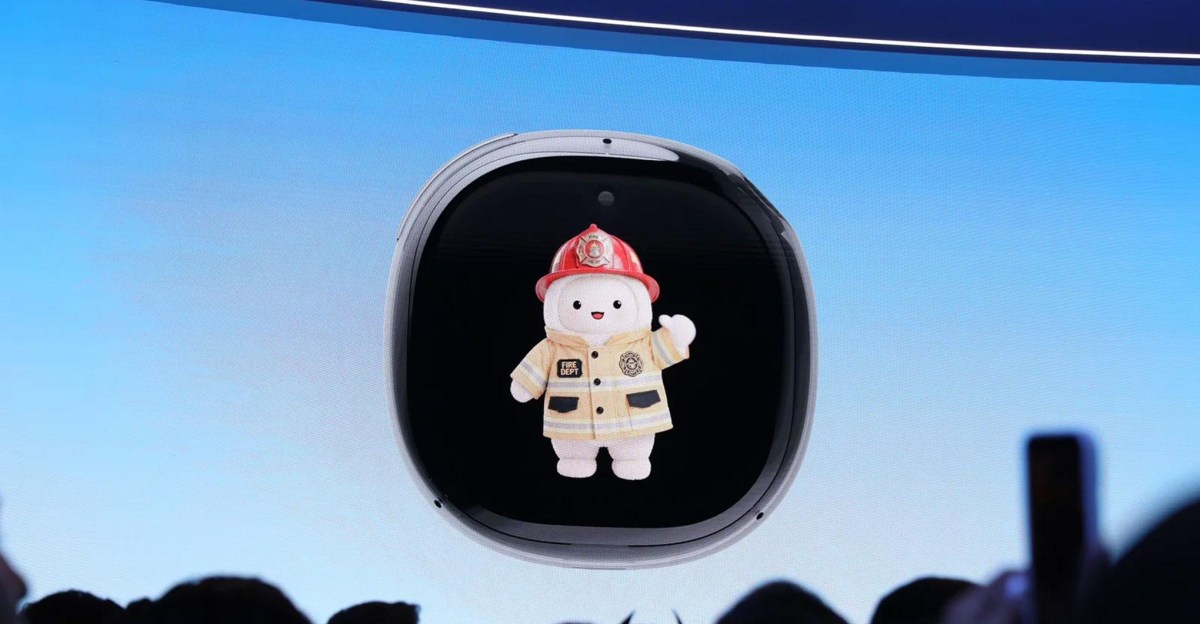
It’s sinister that Meta’s Muse AI mascot is so cute
This is Optimizer, a weekly newsletter sent from Verge senior reviewer Victoria Song that dissects and discusses the latest gizmos and potions that swear they’re going to change your life. Opt in for Optimizer here.
Last night, I asked Blorbo — what I named my Muse AI agent — to help me set some health goals. I was underwhelmed. I’d asked for a workout regimen for a sub-30 minute 5K and regaining lost muscle. It generated an okay-ish but kind of mid weekly routine.
But then I looked at its face. Based on what it learned about me from my emails, it had morphed into cat-shaped piece of bread with a Kirby-like face. It was so stinking cute, it was like getting zapped with the Men in Black’s neuralizer. Until then, I’d been circumspect about sharing too much about my health. But as that cute face gazed into my soul, I started sharing more to see if my recommendations would improve.
And isn’t that just what Meta wants?
I’ve been aggressively avoiding Muse since it launched a few weeks ago. Sure, some of that is because I was busy testing other devices. But the number-one reason why is that I am horribly vulnerable when faced with extreme cuteness.
Alas, at Meta Connect, I couldn’t escape this pink-cheeked fella with his plush ivory fur, and so I finally downloaded the app once I returned to my hotel room. He was plastered on every screen during the keynote. My eye twitched with maximum cute aggression when Meta CTO Andrew Bosworth showed us his Muse agent Cooper. The duderino was dressed in a lil pilot outfit because he’s Boz’s test pilot. My face scrunched with rage when Cooper picked up his pudgy round arms to wave. It’s the cutest thing I’ve ever seen at a tech keynote. The tiny demon in my head thought to itself, “I WANT TO SQUISH ITS LITTLE FACE.”

Worse yet, life-size paper cutouts of the mascot — whom CEO Mark Zuckerberg revealed is named “Jolly” — were peppered throughout Meta’s campus. Jolly is an apt name because each time I saw Jolly images over the past three days, my shriveled heart felt joy. The cutouts featured him in various friendly poses, sometimes in adorable outfits. They were prominently placed at demo stations, where you could slip on a pair of Meta’s numerous smart glasses and test out various scenarios highlighting how these two technologies (in Meta’s opinion) complement each other.
You see, the Muse AI agent is coming to all of Meta’s smart glasses. It’s also coming in a new standalone AI wearable called Charm, which feels part chunky smartwatch, part Humane AI Pin, part Tamagotchi. The idea is that you can carry this cutie patootie with you everywhere you go.
Most people I know would say that Meta stuffing an AI agent into everything and anything feels sinister. Now look at Jolly’s little smile. Tell me it doesn’t make the corners of your mouth twitch slightly upward. If you honestly say no, you’re stronger than I am.
There is immense power in cuteness. Humans and other mammals evolved to find babies cute because it made us better parents. Japan has made an art form of crafting lovable mascots for anything and everything, precisely because it gets people to care about local towns and initiatives. If you think about AI and robot companions, the idea is infinitely more palatable when they look like, say, Mirumi versus the nightmare dogs of Boston Dynamics.
At my first demo with Muse, I was not swayed by its lovable exterior. I was handed a pair of glasses, a set of prompts, and shown some snack props displayed in front of me. This version of Muse was named Henry and was audio-only. He had the deep, dulcet tones of a British man. Henry’s sole purpose was to help a fictional guy named Sean, a 38-year-old gym bro in marketing. Sean was into proteinmaxxing, mixed martial arts, and had an absolutely insane training schedule that involved lifting weights in the morning and another HIIT workout in the evening.

In and of itself, this demo was riddled with AI’s usual pitfalls. I asked Henry which of the snacks displayed in front of me had the best protein bang for its calorie buck. I knew it was going to be the beef jerky stick before Henry took a minute to “think” of the answer. For my colleague Jay Peters, Henry mistakenly said a protein bar had fewer grams of protein than it did. (AI happens to be not-so-great at identifying food from photos.) When I asked Henry to put some granola bites into my cart, it failed to do so because that product “did not exist in the catalog.”
It was neat that I could look at an object via a pair of glasses and have an AI help with a decision-making process based on a specific, personal context. Even with some quirks, I’m sure this will help people with visual impairments, for example. But I’ve seen this demo done a dozen times before, with the same pitfalls. This time, a cynical thought popped into my head: Using glasses like this is an easy way for Meta to learn who is eating what. That could then be easily used for ad targeting and make Meta a boatload of moola. You might be a regular person just trying to eat healthier. But your context feeds into an invisible matrix of demographic data that Meta can surely find a way to monetize, just as it has in its core businesses for the past 20 years.
Which brings me back to Blorbo. As I did with Friend, I named it Blorbo to remind me that this is not real and to retain a semblance of boundaries. After testing various AI companion bots, I know how quickly these relationships with AI companions/assistants/whatever you want to call them can escalate. But I was curious to see how a cute Muse agent could affect my judgment when it came to my personal information. Does a spoonful of cute make the AI pill easier to swallow?

After building my so-so fitness routine, I saw that I could ask Blorbo to help me set relationship goals. I asked Blorbo for examples. It suggested reconnecting with a friend, communicating better with the people in my life, setting clearer boundaries, and dating. It felt weird getting that kind of advice from a cat-shaped pastry blob. It was the one time cuteness worked against the bot. I was less critical of Blorbo when, after granting it access to one of my lower-stakes email addresses, it cleared out a bunch of spam. I was, however, intensely critical of myself.
I mostly engage with AI in the context of my health. It’s part of the job, and oddly enough, a generally private area of life that I personally feel comfortable sharing. Having struggled, I’m acutely aware of how desperate one can feel in the quest to feel normal. In those moments, you’re vulnerable to trying any number of things you might not otherwise. The joy derived from small pleasures is amplified.
Maybe this is why I feel a bit infuriated by how much I love Jolly’s design. Why I feel a slight darkness emanating from its lovable smile. I can imagine in the darkest days of my health journey, finding relief or even joy from a tool that cannot feel anything about me, but to which I’m entrusting so much of myself. I can imagine a cute face helping me, perhaps only briefly, forgetting how I feel about Meta’s history.
That’s diabolical, given that I just spent several weeks with my whip-smart colleagues reporting out all the ways Meta hasn’t earned that privilege.
To be clear, I’m not trying to suck all the fun out of Jolly. We can all agree that someone at Meta really cooked here. All I’m saying is, for those of us who engage with the Muse agent, remember one thing: Don’t be fooled by a cute face.