Lufthansa issues update for all passengers with flights booked | World | News
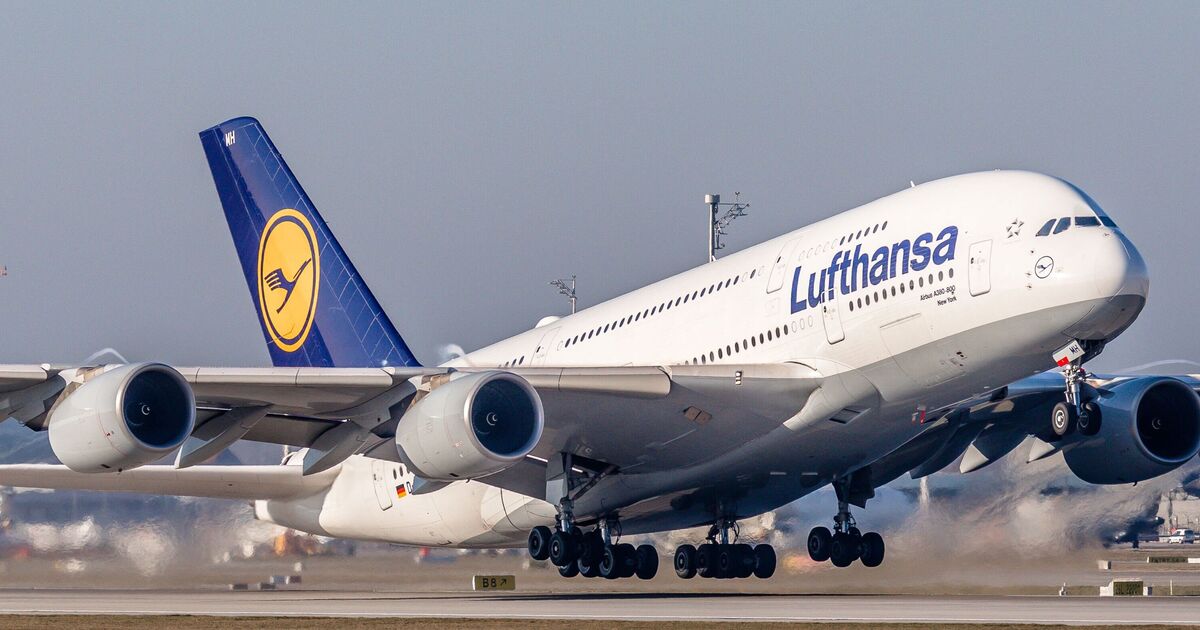
Fatih Birol, executive director of the International Energy Agency (IEA) said flight cancellations could happen “soon” if Iran continues to maintain a stranglehold on tankers navigating the Strait of Hormuz. A spokesperson for the German Lufthansa Group, which operates over 700 weekly connections to Britain, reassured passengers that strong fuel reserves have put it “in a better position” than many competitors. They said: “The Lufthansa Group has secured approximately 80% of its kerosene requirements for 2026 and approximately 40% for 2027 based, among other things, on the price of crude oil – both at pre-crisis levels. With this level of hedging, we are in a better position than most competitors.”
The spokesperson hinted that the situation remains subject to change, however, adding: “This is for the time being. We have not made any forecast for the upcoming months yet,”
Oil benchmark Brent crude jumped 5% to $94.72 a barrel this morning following the fresh closure of the Strait, after tumbling on Friday when Iran declared the shipping route open.
Other major airlines have issued similar messages to worried customers amid the ongoing turmoil, including Jet2, which told users on X that all flights are planned to go ahead as normal over the next two months.
A TUI representative also told a social media user concerned about their trip being cancelled: “We’re closely monitoring the developing situation in the Middle East and its potential impact on global aviation fuel supplies.
“At present, we’re not anticipating any immediate disruption to our flight schedules or holiday programmes from fuel shortages.”
Meanwhile, Javier Gándara, easyJet’s CEO for Spain and Portugal, said the industry consensus seemed to be that “there won’t be any supply problems for the next three or four weeks [but] beyond that, it’s difficult to see”.
And Ryanair boss Michael O’Leary warned earlier this month that disruption to flight schedules could be felt as soon as early May, despite his firm being “reasonably well hedged” on 80% of its fuel.
He told Sky News: “We think there is a reasonable risk [that] some low level, maybe 10% to 25% of our supplies might be at risk through May and June, so like everyone else in this industry, we hope the war ends sooner rather than later.”