Major Elgin Marbles update as Andy Burnham becomes PM | World | News
Greece’s decades-long campaign to secure the return of the iconic Elgin Marbles could face a dramatic new political reality following Andy Burnham’s arrival in Downing Street. Athens has waged a relentless campaign to reunite the 2,500-year-old artefacts in the Acropolis Museum.
Now, with a Prime Minister in No 10 who has spent years publicly backing their handover, one of Europe’s longest-running and most high-profile archaeological disputes could be about to face a major showdown. The Labour leader’s track record on the 2,500-year-old treasures sets him apart from a succession of British prime ministers who insisted the dispute was purely a matter for the British Museum. Mr Burnham’s crusade stretches back over two decades to his early years as a backbench MP, when he backed parliamentary measures calling for the marbles’ repatriation.
As Mayor of Greater Manchester, he doubled down on his stance, arguing the sculptures form an inseparable part of the Parthenon structure that must be viewed as a single, unified piece of history.
While campaigners in Athens have begun to celebrate the new prime minister’s historic stance, No 10 has not yet announced any formal policy change.
What’s more, the British Museum operates independently of the UK Government, and strict legal constraints under the British Museum Act 1963 explicitly prohibit trustees from permanently disposing of items in the national collection. Any permanent surrender would require a vote in Parliament to change the law.
Talks between Greek Prime Minister Kyriakos Mitsotakis and British Museum officials have repeatedly hit a brick wall over core principles, with Mr Mitsotakis stressing that Greece will settle for nothing less than full repatriation and dismissing any prospect of temporary loans.
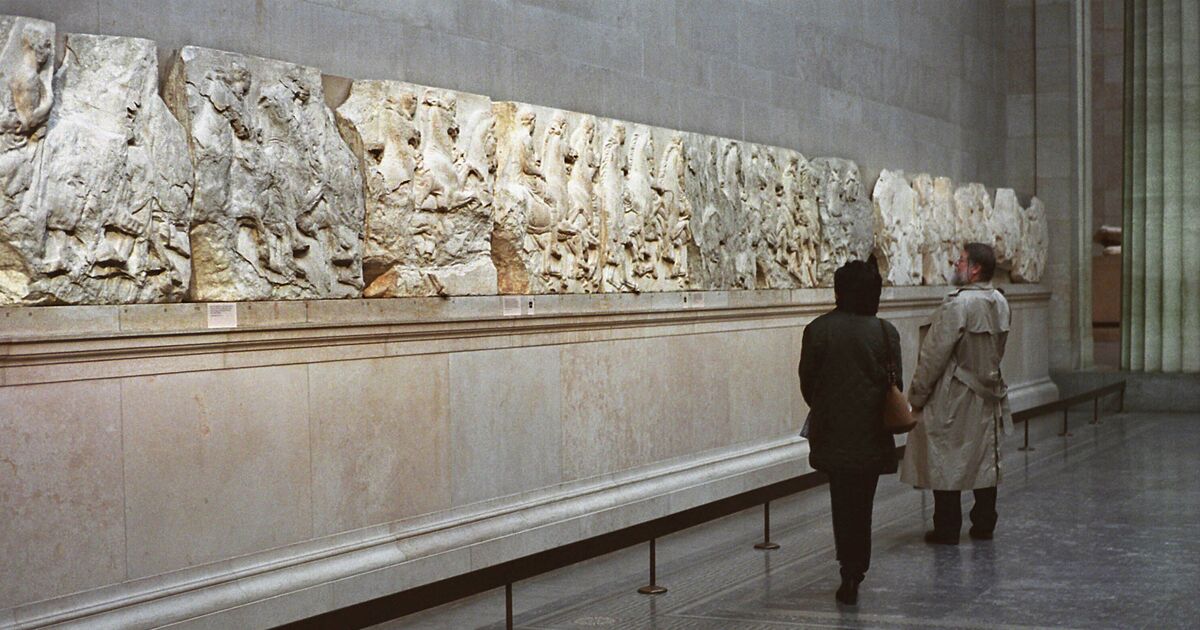
The Elgin Marbles, also known as the Parthenon Sculptures, are a collection of ancient Classical Greek marble sculptures and architectural elements carved around 447 to 432 BCE to adorn the Parthenon and other structures on the Acropolis. Today, roughly half of the surviving sculptures reside in the London museum, while the rest are at the Acropolis Museum in Athens.
Between 1801 and 1812, Thomas Bruce, the 7th Earl of Elgin and the British Ambassador to the Ottoman Empire, which then ruled Greece, arranged to remove the sculptures. He claimed he was protecting the decaying artwork from warfare, weathering and vandalism, citing an Ottoman imperial decree that permitted his team to remove pieces of stone.
He shipped 247 feet of the frieze, 15 metopes and 17 pediment figures to Britain. In 1816, after falling into personal financial distress, Elgin sold the collection to the British Government for £35,000 and Parliament vested the collection in the British Museum.