New supersonic jet 2,500mph faster than Concorde could cut UK to Sydney to 3 hours | World | News

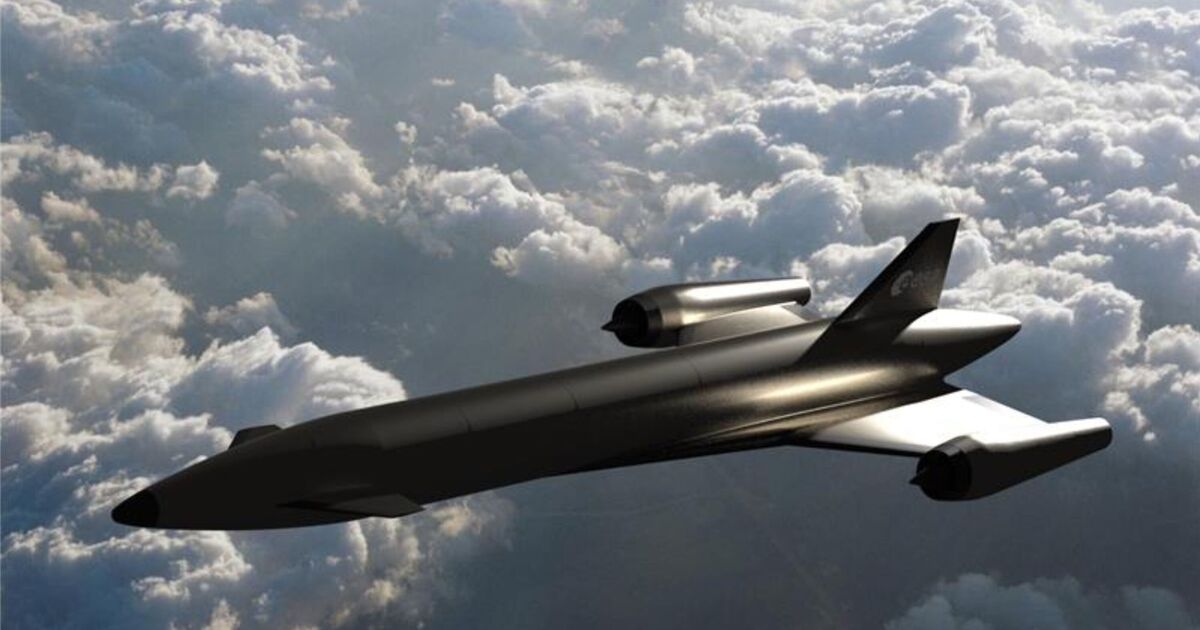
The new jet could see the journey from the UK to Sydney fall from almost a day to just 3 hours (Image: ESA)
A journey from the UK to Australia could one day fall from almost a full day to just three hours if a revolutionary British-led hypersonic aviation programme achieves lift-off. For British holidaymakers and business travellers, the appeal of ultra-fast long-haul travel is obvious, as trips down under currently require navigating long transits, exhausting layovers and brutal jet lag.
A breakthrough in hypersonic technology could completely transform long-distance travel. At the heart of the plan is INVICTUS – a €7million (£5.9million) project funded by the European Space Agency (ESA) to build a reusable test aircraft capable of reaching Mach 5. That is five times the speed of sound – around 3,800 mph – making it roughly 2,500 mph faster than Concorde. Currently, the fastest crewed air-breathing jet aircraft ever built, the Lockheed SR-71 Blackbird, topped out at around 2,193 mph (Mach 3.2).

INVICTUS – Europe’s new hypersonic test platform https://www.youtube.com/watch?v=zwMHvsNCmQE (Image: MechDesignTV/YouTube)
The three-hour London-to-Sydney projection builds on earlier European passenger-aircraft research under the LAPCAT project, which modelled high-speed flights between Europe and Australia taking between two and four hours.
Unlike traditional rockets that launch vertically, INVICTUS is designed to take off horizontally from a standard airport runway like a conventional commercial jet. Once airborne, the aircraft will climb to extreme altitudes beyond 82,000 feet (25km) to test sustained hypersonic flight near the edge of the atmosphere.
To avoid melting at Mach 5, the jet uses a hydrogen-fuelled cooling system that chills superheated incoming air in a fraction of a second before it enters the engine.

Spaceport Cornwall in Newquay has been shortlisted as a potential site for flight tests (Image: Getty)
The programme is currently in its concept and preliminary design phase, with Spaceport Cornwall and Machrihanish in Scotland shortlisted as potential UK operational sites for flight test campaigns. The project aims to build and fly a Mach 5-capable experimental demonstrator by early 2031.
The first INVICTUS aircraft won’t carry passengers. Instead, it will be an uncrewed test jet used to trial new engines, heat-shielding materials and self-flying control systems in real flight conditions. If those tests succeed, the technology could pave the way for a new generation of commercial passenger jets.
Ski travel expert Alex Dyer, Managing Director at Ski Vertigo, highlighted how transformative the technology could be for the industry: “Taking most of a day out of the journey would reduce connection stress and make shorter Australia holidays feel more realistic.
“But travellers should see three hours as a long-term possibility, because a successful test platform is still several stages away from a certified aircraft with an airline, timetable and fare.”

Concorde crossed the Atlantic in under three and a half hours before retiring in 2003 (Image: Getty)
While a three-hour hypersonic flight remains a distant prospect, a direct one-leg flight between London and Sydney is only a couple of years away. Qantas is set to launch its long-awaited Project Sunrise in October 2027, featuring nonstop flights aboard custom Airbus A350-1000ULR aircraft configured with 238 seats.
Cutting up to four hours off current stopover itineraries, the 22-hour non-stop journey will become the world’s longest scheduled commercial flight, with tickets slated to go on sale in February 2027. Ahead of its passenger launch, the ultra-long-range jet has just proved its range after completing a historic 19-hour test flight non-stop from France to Australia on Friday.
Concorde defined luxury supersonic travel for nearly three decades, cruising at Mach 2.04 (1,350 mph) at altitudes up to 60,000 feet to cross the Atlantic in under 3.5 hours. However, high fuel and maintenance costs, land-based sonic boom restrictions and declining passenger numbers following a fatal 2000 crash led to its retirement in October 2003. Since then, commercial supersonic travel for everyday passengers has remained grounded, while modern aerospace projects work to safely resurrect it.