Prominent American marine biologist shot dead, companion injured in the Philippines
A distinguished American marine biologist has been shot dead by three men who entered his house in the central Philippines, police said on Tuesday.
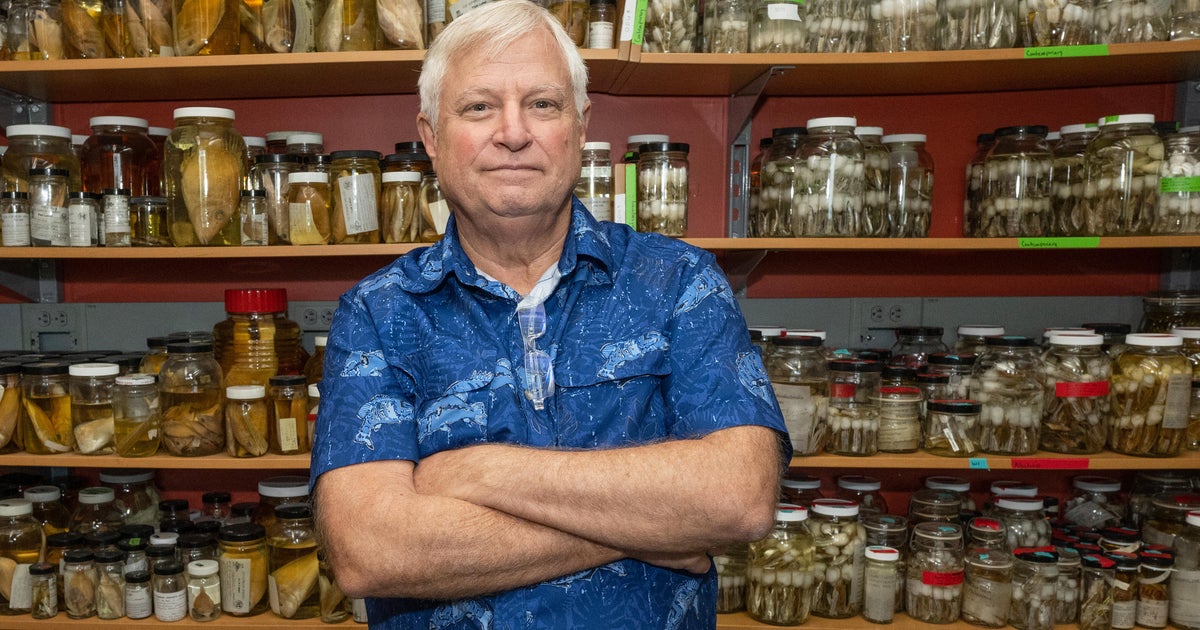
Kent Carpenter, 73, was with his Filipina companion in a house in the coastal town of Sibulan, in Negros Oriental province, on Sunday night when the masked men forced their way in.
One drew a gun and shot Carpenter in the head, killing him instantly, police said his companion told them. The men took a laptop, an unspecified amount of cash and a backpack before fleeing, national police spokesperson Col. Allen Rae Co told reporters.
Regional police spokesperson Lt. Col. Joem Malong told The Associated Press that Carpenter’s companion sustained unspecified injuries and was being treated. Investigators were trying to determine the motive for the killing and identify the attackers.
Carpenter was a marine biologist who had worked as a lecturer at the Silliman University, in Dumaguete city, Negros Oriental, Malong said.
Chuck Thomas/Old Dominion University via AP 
The U.S. Embassy in Manila did not immediately respond to a request for comment.
“We assure the victim’s family, the community and our foreign visitors that this case is being treated with utmost urgency and no effort will be spared until justice is served,” regional police director Brig. Gen. Romano Cardiño said.
The most recent travel advisory from the U.S. State Department says Americans should “exercise increased caution in the Philippines due to crime, terrorism, civil unrest, and kidnapping.
Carpenter had been a biological sciences professor at Old Dominion University in Norfolk, Virginia, since 1996. His research — which focused on the Philippines and the Coral Triangle between the Indian and Pacific oceans — shaped conservation efforts around the world, university officials said. Carpenter studied biodiversity in the Philippines’ Verde Island Passage, and he advocated for its designation as a World Heritage Site.
Old Dominion said he was on an extended research assignment in the Philippines and planned to retire in September.
Last year, the university touted Carpenter’s research comparing museum specimens from 1907 to current populations of fish.
“He dedicated his career to expanding our understanding of the world’s bodies of water and protecting some of its most vulnerable ecosystems,” Old Dominion President Brian Hemphill said in a statement. He described Carpenter’s killing as sad and devastating. “His scholarship and passion impacted and inspired many individuals locally, nationally, and internationally.”
On his university webpage, Carpenter wrote that his research in marine conservation biology centered on assessing the extinction risks to fish species and plants. In 2010, he told the AP that unchecked global warming could lead to the extinction of all coral reefs on the planet within 100 years.
“You could argue that a complete collapse of the marine ecosystem would be one of the consequences of losing corals,” he said. “You’re going to have a tremendous cascade effect for all life in the oceans.”
Carpenter’s interest in the Philippines stemmed from his Peace Corps assignment there in the 1970s, according to a 2007 Old Dominion newsletter.
Several Philippine environment and biodiversity centers mourned Carpenter’s death. Silliman University said Carpenter was an exceptional scientist, who had collaborated with the university on marine research work and studies since 1976.
“Dr. Carpenter made ground-breaking contributions that transformed global understanding of Philippine marine biodiversity,” the university said in a social media post.
“We remain profoundly grateful for his decades of scholarship and service to the University,” the school continued. “His legacy will continue to inspire future generations of Sillimanians committed to the advancement of science and the conservation of our marine environment.”