Russia rocked by fuel crisis as Ukraine humiliates Putin | World | News
Russia’s fuel crisis is intensifying as Ukraine steps up its strikes. Ukraine has claimed a fresh wave of strikes against vessels linked to Moscow’s “shadow fleet”. Ukraine’s drone force commander, Robert Brovdi, known as Magyar, said via Telegram that 14 Russian ships were hit in just one night from Wednesday into Thursday. He said that at least 36 Russian ships have been hit and set on fire over the last four days in the Sea of Azov.
The military said on Telegram: “The affected vessels were used, among other, to supply fuel and oil materials to the grouping of troops of the Russian Federation, as well as to transport oil and petroleum products in the absence of international sanctions,” They provide the export of energy carriers, which is one of the key sources of financing the war against Ukraine.”
The attacks form part of Kyiv’s strategy to disrupt fuel deliveries to to choke off supplies and transportation routes in and out of occupied Crimea. The latest strikes come as Russia struggles with widespread fuel shortages.
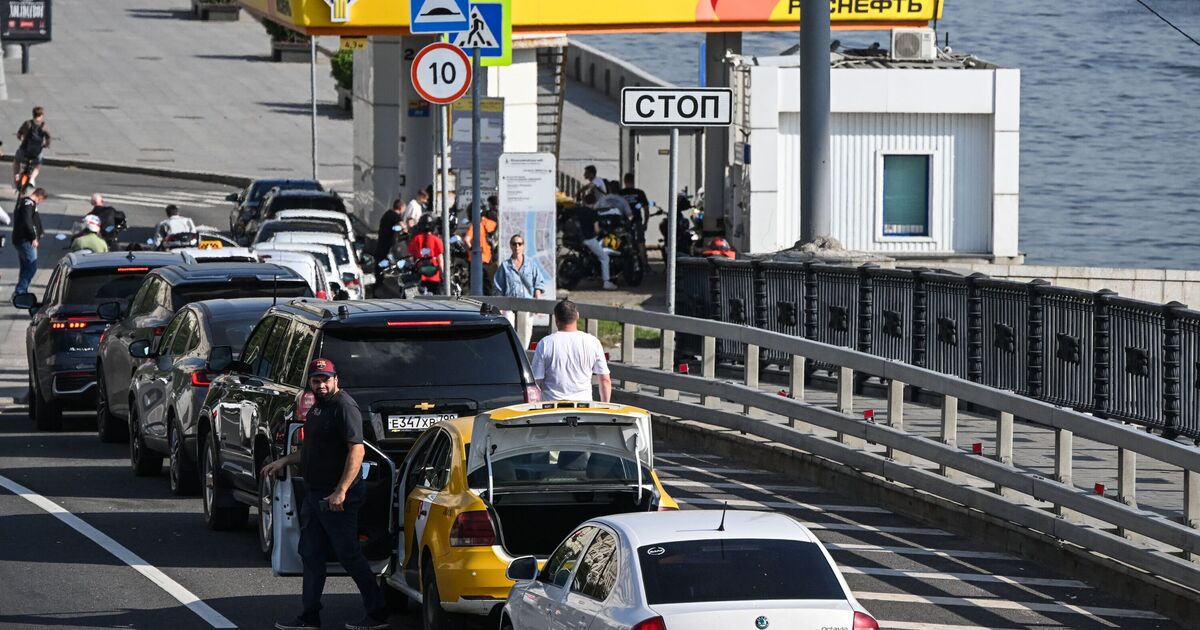
Hours-long queues have formed at petrol stations across several regions, with reports of rationing and temporary sales restrictions as supplies tighten. Rising prices have also added pressure on businesses and motorists.
Fuel shortages and rationing have reportedly spread to more than 90% of Russia’s regions, while Moscow has introduced a ban on diesel exports in an effort to protect domestic supplies.
The Sea of Azov serves as a key supply corridor for Russian forces, helping transport fuel, equipment and other military supplies to occupied Crimea and Russian-controlled areas of southern Ukraine.
Last month, Putin said Crimea’s monthly fuel demand stood at around 70,000 tonnes.
Volodymyr Zelenskyy wrote today (Friday, July 10) on X (formerly Twitter): “This week, our warriors achieved important results in imposing long-range sanctions against Russian facilities that fuel this war.
“Ukrainian drones reached Siberia and struck the oil refinery in Omsk – nearly 2,500 kilometers from Ukraine. Now, no Russian oil refinery is beyond the reach of Ukrainian weapons.
“Our responses to Russian strikes also targeted oil facilities in the Saratov, Rostov, Tver, Stavropol, and Krasnodar regions, as well as in Tatarstan and Bashkortostan.
“An airfield in the Voronezh region and a strategic enterprise in Tver were hit. Drones were also used against facilities in the Moscow, Leningrad, and Bryansk regions. Our long-range sanctions plan against Russia is firmly on track. I thank all of the units involved for their accuracy!”