Several former Hamas hostages in Gaza share accounts of sexual assault
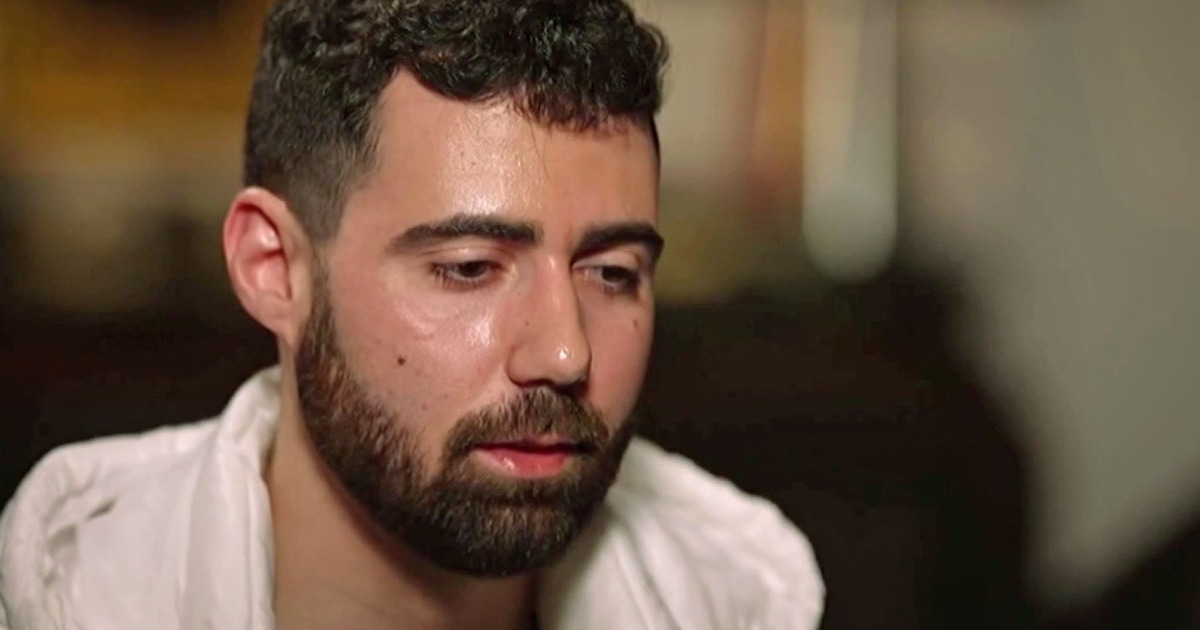
TEL AVIV — Guy Gilboa-Dalal said he had already been held captive in the Gaza Strip for nearly 18 months when one of his Hamas captors pulled him from his tiny, crowded cell. The militant made the blindfolded 24-year-old strip naked and sit on a chair.
Subscribe to read this story ad-free
Get unlimited access to ad-free articles and exclusive content.

“You didn’t see girls for a long time, right? Do you watch porn?” he remembers his captor asking. “Do you want to make porn with me?”
“You’re kidding, right?” Gilboa-Dalal says he replied. “It’s not allowed in Islam.”
The next 20 minutes were agonizing, he said — and terrifying. The man kissed and touched his neck and rubbed his genitals against Gilboa-Dalal. His captor put his hand on Gilboa-Dalal’s pounding heartbeat and asked if he was frightened. Then he felt the man near his neck again — this time, with a knife and a threat: “‘If you ever tell anyone about it, I’ll kill you.”
That first assault, and another a day later, lasted only a few minutes, he said. But Gilboa-Dalal, who was captured when Hamas fighters stormed the Nova music festival during the Oct. 7, 2023, terrorist attack on Israel, still describes those moments as the worst he endured during two years of isolation, starvation and beatings amid Israeli bombardment.

Gilboa-Dalal is among several former hostages, mostly women, speaking publicly about alleged sexual assaults at the hands of the militants in the Gaza Strip. Some in Israel accuse United Nations observers and human rights groups of downplaying the issue. Hamas has denied that its militants committed sexual crimes during or after the attack.
There have also been numerous allegations of sexual assault against Palestinians in Israeli detention, including the alleged gang rape in 2024 of a man in the notorious Israeli military prison, Sde Teiman. Five Israeli reservists were charged with aggravated abuse and causing serious bodily harm. They denied the charges, and the case was dropped in March.
Since Oct. 7, 2023, one Israeli soldier has been sentenced for torturing a Palestinian detainee, according to Amnesty International.
Gilboa-Dalal was released in October as part of the U.S.-brokered ceasefire, which included the stipulation that all hostages be returned to Israel and around two thousand Palestinian men, women and children being held by Israel returned to Gaza. He says his excruciating thoughts have lingered, though, mostly during his fitful sleep when his mind replays the alleged assaults on loop.
“And it’s so real. It feels so real,” he said.
“When I got sexually assaulted, it’s not only that I had to go through it — I was alone and I couldn’t share this with anyone,” he said. “Those thoughts that I had at that time were really destroying my brain. Maybe it was my fault. Maybe it will last forever and maybe it will kill me eventually. I’m stuck there in that tunnel. I have nowhere to run.”

The same guard struck again days later. After a uniquely tough beating, the guard made him and his fellow hostages take showers. But as Gilboa-Dalal walked out, he says, the guard held him back, refused to let him get dressed, threw him onto a sofa and proceeded to sexually assault him.
“I don’t know exactly how much time because my brain kind of disconnected,” Gilboa-Dalal said. “Then he told me again, ‘If you ever tell this to anyone, I’m gonna kill you.’”
Fear for his life kept him from openly talking about his ordeal in captivity, Gilboa-Dalal said. Speaking about it now has become a kind of catharsis.
“I had to keep it to myself for such a long time, and now when I speak about it, I feel like it’s important for my healing too,” he said.
He hopes that his story will empower other victims to speak — survivors who, like him, have struggled to process the lingering feelings of dread, violation and helplessness.
Hostages found ways to cope with the possibility of being assaulted. Amit Soussana 42, for example, said she carried a sanitary pad with her to the bathroom to try and dissuade potential attackers.
“I fooled him to think the period is continuing,” she said in “Screams Before Silence,” a 2024 documentary made by Sheryl Sandberg, former chief operating officer at Facebook. “I did it for about a week until I couldn’t lie anymore.”
Then the guard came into her shower armed.
“The gun was pointing at me and he was huffing and breathing terribly and he had a face like a monster, like a beast,” she said. “And then he forced me to commit a sexual act on him.”
Many felt they had to choose between silence or death — the militants were anxious to hide their crimes even from their comrades.
Another former hostage, Romi Gonen, 25, told Israel’s Channel 12 last month that she had been repeatedly raped by multiple men during her two years in captivity.
“I was injured, I had no power,” she told the documentary show “Uvda.” “All that went through my head was: ‘Romi, everyone in Israel thinks you’re dead, and you’re going to be a sex slave in captivity.’”

In December 2023, she said a senior Hamas official offered to prioritize her in the next hostage release if she would stay silent about the abuse.
“There is a reason for trying to hide it, not just a cultural reason,” said Sharon Zagagi-Pinhas, former chief military prosecutor for the Israel Defense Forces, and a founder of the Dinah Project, an organization that gathers testimony from survivors of sexual assault on Oct. 7 and in the years that followed in the hopes of one day prosecuting the perpetrators.
“When you want to present yourself as freedom fighter, as resistance, you can’t use sexual violence,” she said.
“A Quest for Justice,” a report released by the Dinah Project on July 8, alleges that Hamas systematically used sexual violence as a weapon of war during the attack — claims the group denies. At least some of the sexual violence in captivity seemed aimed at humiliation and demoralization, Pinhas said, like forced nudity, publicly shaving hostages’ body and pubic hair and threats of forced marriages.
These are all examples of sex being wielded as a weapon of war, she said, but cautioned that justice in such cases is often elusive.
“When you look at arenas around the world, you see that there are many cases of sexual violence as a weapon of war, but very, very, very few indictments or sanctions or actions,” she said.
Many victims who were raped during the Oct. 7 attacks were killed, she said, and a number of former hostages “are unable to speak because they’re under trauma.”
But Pinhas has said she’s been frustrated by what she considers a relatively muted response from the international community, particularly Western feminists and international women’s rights organizations.
“I don’t believe the world is paying adequate attention,” she said. “People don’t want to hear it because they are so consumed in their arguments against Israel.”
For Gilboa-Dalal, justice is a secondary concern: His captivity is finally over, but the long road toward recovery — emotional, physical and mental — has only just begun.
“It’s with me even now when I’m back home,” he said of his captivity. “It’s with me all the time. It’s not just over there.”