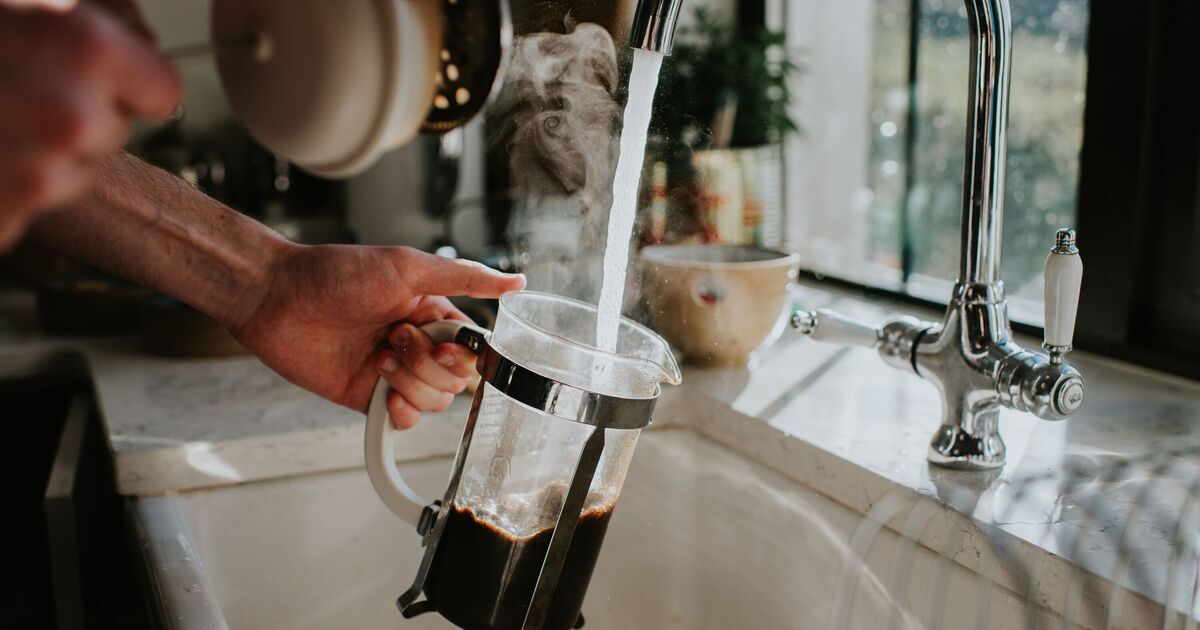
Stop pouring caffeinated product down sink – it wreaks havoc
A plumber has issued advice to coffee lovers following a series of callouts related to issues caused by the hot drink.
If you make your beverages in a filter coffee machine or cafetiere/French press, you may want to think twice about how you dispose of your spent grounds. Alejandro from EJ Plumbing took to TikTok to explain how you can avoid falling foul of an unnecessary bill.
“We’ve been asked if pouring your coffee [down the drain] grains after you’re done having your coffee – is it bad for your pipes?” he began in a video. “Absolutely, it is bad.”
Alejandro elaborated: “You are going to clog all your drains – nothing is going to drain, and you are going to have to get a plumber to come out and snake your pipes and remove all those grains that have been building up inside.”
Instead, used grounds can be reused in the garden. Former royal gardener Jack Stooks explained in his own TikTok clip: “Coffee grounds can be used in the garden as a fertiliser. Like most fertilisers, it consists of the elements NPK: nitrogen, phosphorus and potassium.”
It’s the ideal fertiliser to spread across borders to help encourage flowers to grow big and strong.
“Coffee grounds are also really good for bringing worms into the garden,” added Jack, who noted that the worms help to bring air into the soil, thereby improving aeration.
Coffee in bulk could also be used as “thick mulch to place over the soil and around plants”. Jack explained why this would be a good idea, stating that coffee mulch helps to “suppress weeds, lock in moisture and acts as a physical barrier to the wind and sun”.
Meanwhile, backing up Alejandro’s advice, Express Drainage Surveys advises online: “You should never pour your used coffee grounds down the drain because of how they behave in water.” There are two main issues at play here:
- Unlike regular food waste, coffee grounds don’t dissolve or break down in water. In fact, they’re more likely to compact themselves and clump together.
- When you combine coffee grounds with grease and soap, which are plentiful in most drains, they tend to form a dense sludge.
As for the science behind the problem, the experts explain: “Coffee grounds have a structure that is oil retentive, granular and fibrous, which means it shares similarities with other common offenders such as rice, pasta, eggshells and cooking oils.
“We know that coffee and its oil residue can stick within pipes themselves, but when those grounds bind to any fats in the system, they form an almost immovable layer. That slows your water flow right down and gives bacteria more and more time to grow.
“This is partially how fatbergs are created, a real news item covered over the last decade or so in the UK, particularly in London.”