The job market is much stronger than economists expected. Why?
Against all odds, the U.S. job market is in a good place.
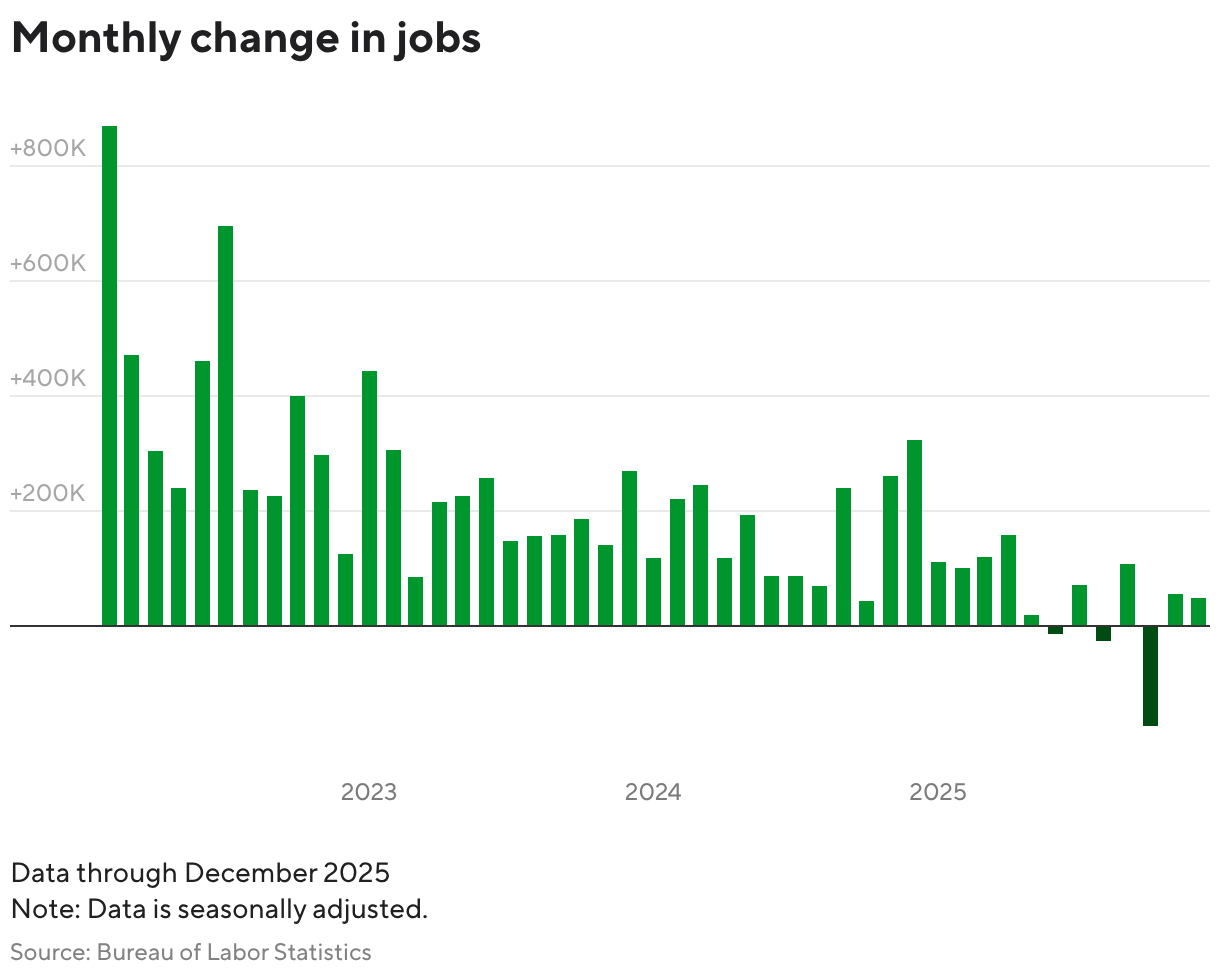
Employers added 172,000 jobs in May, blowing past analyst forecasts and sustaining the healthy pace of payroll gains from the two prior months. Average monthly job growth from March through May has tripled from roughly 63,000 a year ago to nearly 190,000 this spring.
The economy has faced one headwind after another over the past year, including the highest tariffs in more than 70 years; the Iran war; a recurrence of the inflationary pressures that slammed Americans during the pandemic; and persistent public pessimism, or “vibecession,” as millions struggle with the cost of living.
Despite these challenges, the labor market is showing surprising strength after weakening toward the end of 2025 and into early 2026.
Several forces account for the recent burst in job growth, according to economists. Strong corporate profits are “a huge part of the equation,” eToro U.S. investment analyst Bret Kenwell told CBS News. “That’s what gives them the leeway to hire.”
U.S. corporations boosted their earnings growth in the first quarter by about 28%, while 85% of S&P 500 companies posted quarterly profits that exceeded analysts’ expectations — the highest share in almost five years, according to a FactSet analysis.
Corporate earnings growth over the last two years has averaged a healthy 11%. Analysts now expect second-quarter profit growth of about 22%, the financial data firm said.
The Republicans’ “One Big Beautiful Bill,” which lowered corporate taxes and provided other breaks, has helped bolster profitability, according to Wall Street analysts.
Stronger corporate growth and profits are most visible in the health care industry. The sector has been the top driver of job creation over the last year, according to a new analysis from job search firm Indeed. The industry has added 610,000 jobs during the past 12 months, far greater than any other sector. Leisure and hospitality contributed the second-largest number of new jobs, at 240,000.
The jump in health care employment reflects the aging U.S. population, with the baby boomer generation demanding more health services as the oldest members of the group approach 80 years old, Indeed director of economic research Laura Ullrich told CBS News.
Besides health care, hiring was also vigorous last month among leisure and hospitality companies ahead of the summer travel season and the 2026 World Cup, which kicks off in June.
The May jobs report “was a little more broad-based than what we have seen — leisure and hospitality was up a lot, local government was up a lot, health care and social assistance were still up,” Ullrich said.
Seasonal demand also likely helped drive May hiring, analysts said. For instance, local government added 55,000 jobs last month, likely due to summer demand for state and local parks workers, public works projects and other summer operations, Dominic Pappalardo, chief multi-asset strategist at Morningstar Wealth, said in a report.
Leisure and hospitality companies, which added 70,000 jobs last month, likely needed to staff up for tourism and travel over the summer, he added.
Robust hiring in those industries is “a positive sign for overall economic activity,” he said.
Pockets of weakness
The recent upturn in job growth doesn’t appear to have brightened many Americans’ outlook: 7 in 10 said they believe it would be somewhat to very difficult for them to find a new job, according to recent CBS News polling.
Such pessimism may reflect the labor market’s weakness at the end of 2025 and the start of 2026, when employers shed an average of 4,300 jobs a month from December through February.
Yet the encouraging employment numbers of late don’t tell the full story. The hires and quits rates both remain seriously depressed, and workers who might otherwise jump ship to something better are staying put because the off-ramps have dried up.
For those who are out of work, meanwhile, low layoffs offer little comfort when tepid hiring makes a job search more difficult.
Some industries have also shed jobs over the past year, indicating pockets of weakness underneath the recent strong headline payroll numbers, Ullrich said. Sectors with year-over-year employment losses include government and financial services, which have lost 174,000 and 107,000 jobs, respectively, according to Indeed’s analysis.
“Seven sectors are up in terms of employment year-over-year, and seven sectors are down,” she said.
Some types of workers, like recent college grads and laid-off workers, are also struggling to find work. Nearly 28% of the unemployed in April had been jobless for more than six months, the largest share since December 2021.
“Two things can be true at the same time,” Ullrich said. “You can have a relatively strong jobs report for May, and job seekers can be struggling. Those things are possible to happen at the same time.”