Tottenham listen to James Maddison and launch immediate investigation | Football | Sport

Roberto De Zerbi kept Tottenham Hotspur in the Premier League despite their significant injury issue (Image: Alex Pantling, Getty Images)
Tottenham have initiated an internal review into their catastrophic Premier League campaign, which includes enlisting a psychologist to eradicate ‘Spursy’ mentality, addressing their appalling injury crisis, and even examining their retractable stadium pitch. The north London outfit avoided relegation on a tense final day thanks to Roberto De Zerbi transforming their fortunes with 11 points from their closing six fixtures.
It was reported on Tuesday that Spurs sporting director Johan Lange’s position at the club is under serious scrutiny as the principal football figurehead during a calamitous 12 months, which saw four different head coaches employed, with the Dane potentially moving into a supporting or transitional role to accommodate an incoming world-class sporting director. Just two points prevented Tottenham from tumbling into the Championship this season, and they were severely hampered by sustaining more injuries than any other Premier League side, many of them severe.
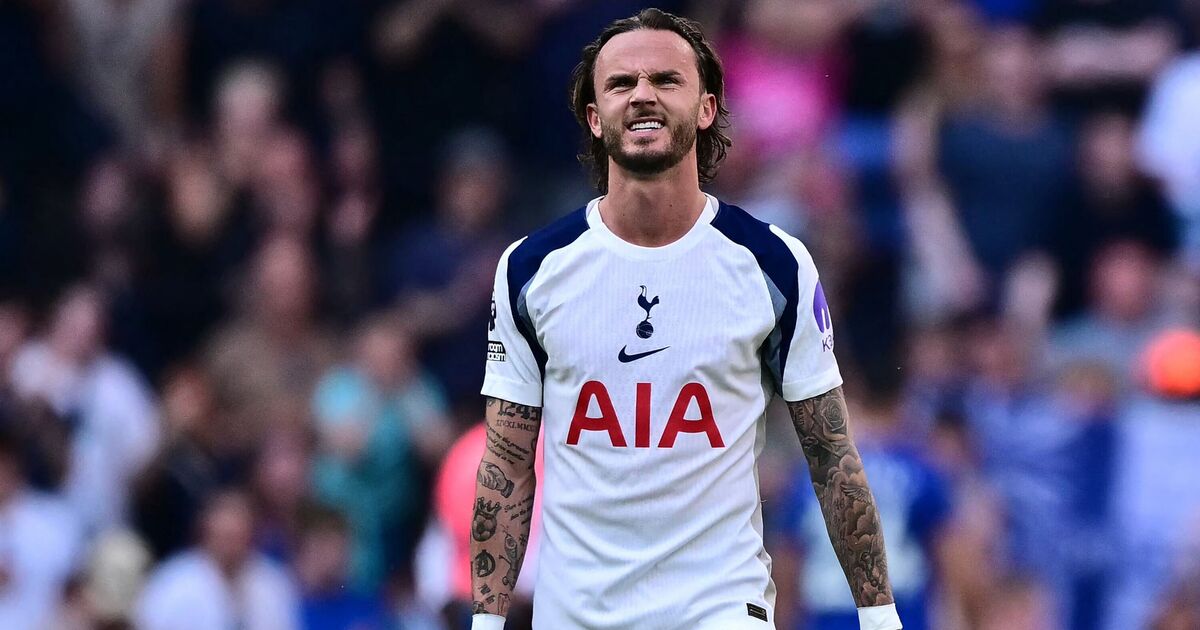
James Maddison, who has only recently returned after his partially torn anterior cruciate ligament fully ruptured last summer, lambasted the issues. “Our situation with the injuries has been worse than any other c,lub,” the midfielder said following Tottenham’s victory over Everton. “People try and say ‘Oh, but we’ve got this and that’, but ours is astronomical and we need to look at why that is.”
It is understood that a substantial internal review has been underway behind the scenes at the north London club, spearheaded by new performance director Dan Lewindon following his arrival in February from the City Football Group, where he discovered significant issues within Spurs. He joined the club after working his notice period with City and entered through the doors at Hotspur Way the day before Thomas Frank was sacked by the club.
Tottenham’s medical and performance departments have also experienced enormous upheaval in recent years. Following an extended period of stability under the head of medicine and sports science, Geoff Scott, the New Zealander, departed in 2024 after more than two decades of service and is now at Nottingham Forest.
Director of performance services Adam Brett and head of sports science Nick Davies both left Tottenham after just a year in their respective roles. Nick Stubbings joined Spurs last summer as the men’s team’s medical lead, following 11 years at Brentford, crossing the capital to north London alongside Frank and various other former Bees.

Dan Lewindon is set to overhaul the way Tottenham Hotspur deal with their injuries after huge issues (Image: undefined)
However, it is Lewindon who is the driving force behind Tottenham’s transformation. He possesses extensive experience in performance, science and medicine across the elite levels of football, tennis and rugby, and Spurs are confident he will finally eliminate the injury problems that have resulted in double-figure player absences for far too many matches across the past three seasons.
De Zerbi is said to have already forged a strong rapport with Lewindon, with the pair known to hold regular conversations regarding the improvements required across the club’s performance and medical departments to bring them in line with the world’s leading clubs. Non-executive chairman Peter Charrington confirmed on Monday that steps would be taken to “modernise our football operation, with a significant focus on raising standards across medical and performance”.
The impact of De Zerbi’s methods has been felt beyond the pitch as well. The 46-year-old is understood to have made a considerable impression on many within the medical department by remaining clear and consistent in his approach — despite the pressure to deliver results — and by making plain his reluctance to take unnecessary risks with players.
Those who have shared a room with the Italian describe a man eager to gather as much feedback as possible in order to make the right calls on when to reintegrate players, consistently prioritising individual welfare over the pursuit of victory.
EXPRESS SPORT ON FB! Get all the best sports news and much more on our Facebook page

De Zerbi has made a strong impression on players and staff since taking over at Spurs (Image: Will Cooper/Shutterstock)
Newly appointed Lewindon has already been involved in an investigation into whether the Tottenham Hotspur Stadium’s retractable pitch — which slides beneath the south stand to accommodate NFL fixtures and concerts — has contributed to a troubling run of ACL injuries, with five occurring at Spurs in recent years alone, a figure the club privately acknowledges as unacceptably high. Real Madrid have also experienced a significant number of injuries since installing their own retractable surface.
To ensure that this is not merely a coincidence, early external independent testing on each match day has thus far shown no variation in the bounce and spring of Tottenham’s stadium pitch compared to the Hotspur Way training surface, though more comprehensive analysis is planned over time to facilitate a thorough review.
Certain ACL injuries are simply unfortunate, as witnessed with those sustained by Xavi Simons and Wilson Odobert. As with all injuries, the manner in which Xavi’s injury at Molineux was handled by the physios was reviewed and subsequently approved, with the player eager to carry on but unable to do so. The appropriate precautionary measures were believed to have been implemented with no additional harm inflicted upon the Dutchman.

James Maddison called on the club to fix their injuries issues after two seasons of health struggles (Image: Vince Mignott/MB Media/Getty Images)
There is also the psychological dimension alongside the physical aspect. At a club frequently labelled ‘Spursy’ owing to their propensity to self-destruct, Lewindon has been instrumental in advocating for the appointment of a new full-time lead psychologist to work with the players and staff who support them, helping everyone cope with the demands of elite-level sport.
De Zerbi has made it abundantly clear to those within the club that he views part of his remit as serving as a psychologist to his players, and this has been apparent through regular individual meetings with them and the restoration of confidence at every opportunity during that crucial run of results towards the season’s conclusion, including the deployment of video footage showcasing their finest moments from Spurs matches and at previous clubs.
In a bid to place greater emphasis on individuals, Lewindon is also understood to be seeking to overhaul the way Tottenham handles injuries and recovery, moving towards a more integrated approach. This would involve a pod-based model in which groups of four to six players receive a tailored programme, with a dedicated physio and sports scientist concentrating on that smaller group rather than operating across the wider squad.
Much like a teacher working with fewer pupils, this shift is expected to help staff develop a deeper understanding of each player’s individual needs and specific positional demands, ultimately leading to more informed, collaborative decisions on training and physical preparation. This aligns closely with De Zerbi’s conviction that the club must provide greater support to players on a personal level, properly understanding them as individuals — in their home lives, family circumstances, and roles on the pitch — to enable them to compete at the highest level.
Spurs are also keen to strengthen trust between players and their medical department, with some having previously turned to staff from former clubs or their international medical teams. Every football club works alongside the ever-growing number of personal performance staff that modern players employ, as well as their international counterparts. Tottenham are now looking to deepen those bonds between all parties, ensuring each player receives the finest possible care through a single, unified plan that everybody involved can agree upon and endorse.
Once Lewindon’s review concludes, behind-the-scenes staff changes are anticipated, bringing fresh thinking and new faces, along with improved cross-departmental collaboration, a greater focus on understanding individual players, and a shift in Tottenham’s transfer strategy to recruit more physically resilient players suited to De Zerbi’s high-intensity approach.
There is also a recognition within the club that the constant managerial turnover has played a significant role in the injury crisis, with ever-changing training methods, new head coaches frequently pushing players harder, and players themselves overexerting in a bid to impress each incoming boss.
Tottenham are acutely aware they cannot endure another campaign as torrid as the one just concluded, and having a fuller squad at De Zerbi’s disposal will be instrumental in turning fortunes around. While improvements may not materialise overnight, Spurs are hopeful that Lewindon’s intervention will ultimately bear fruit, resulting in a dramatically reduced injury toll over time.