U.S.-Iran memorandum of understanding likely to be signed next week
A letter of intent or memorandum of understanding between the U.S. and Iran is likely to be signed early next week, opening the way to further negotiations about an enduring U.S.-Iran agreement, two sources familiar with the diplomatic efforts said.
The signing of the memorandum would kick off 60 days of talks to negotiate details of a U.S.-Iran agreement. That time period could be extended as needed, according to multiple sources.
First steps include ensuring “freedom of trade” by demining and opening the Strait of Hormuz. In principle, Iran would commit to a lockout of 15-20 years during which it would not enrich uranium and would dismantle its nuclear sites. In exchange for taking these steps, Iran would receive financial relief staggered over time and sequenced to correspond with compliance.
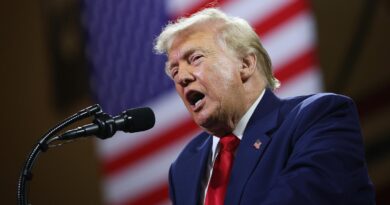
On Thursday, President Trump said on Truth Social, he had “canceled the scheduled strikes and bombings against Iran this evening” because the final points of a potential deal have been approved by “all parties involved,” including the U.S. and Middle East countries, which he listed, though Iran was not among them.
The president said a “time and place” for a signing would be “announced shortly.” He’s expected to travel next week to a gathering of the world’s largest economies at the G7 summit in France, where the disruption to global trade caused by the war was expected to be a key topic.
Mr. Trump mentioned the signing during an unrelated Oval Office event Thursday afternoon and said he would not be present for it, but Vice President JD Vance would attend. The president said it could take place as early as this weekend in Europe.
“The strait will open as soon as we have it signed,” the president said.
Shortly after Mr. Trump’s post on the potential deal, the Fars News Agency, associated with the Iran Revolutionary Guard Corps, quoted a “knowledgeable source close to the Iranian negotiating team” who denied the president’s claim about an agreement on an initial deal and stated that “no text of the initial memorandum of understanding with the United States has been approved.”
Israel has not yet commented, but the president said he had spoken with Israeli Prime Minister Benjamin Netanyahu, as well as several Arab leaders.
The understanding between the U.S. and Iran would include having United Nations inspectors from the International Atomic Energy Agency, or IAEA, dispose of what Mr. Trump refers to “nuclear dust” and to inspect the nuclear sites. Last June the U.S. and Israel bombed three nuclear sites, at Fordow, Natanz and Isfahan. The enriched nuclear material is assessed to be under the rubble at those locations.
In the Oval Office, the president said of Iran, “They will not have a nuclear weapon — they’ve agreed to that,” adding that Iran would also not purchase or develop a nuclear weapon “in any way shape or form.”
The war in Lebanon involving Iranian proxy Hezbollah is mentioned in the memorandum, but details are scarce, multiple sources told CBS News. Israel launched a ground invasion into Lebanon in March after Hezbollah launched rockets across the border, and just this past week, Israel bombed outside of Beirut. The violence threatened to disrupt U.S. attempts to get the Lebanese and Israeli governments to normalize relations and work together against the Hezbollah militia.
Earlier this month, Secretary of State Marco Rubio testified before the Senate Foreign Relations Committee and laid out some of the parameters for a deal. He said that Iran must reopen the Strait of Hormuz and allow international ships to sail through “without being fired upon without paying a toll.”
He also told the panel that in phase 2, Iran must commit to “very specific negotiations on highly enriched disposition of the highly enriched uranium that still is buried deep in a mountain somewhere.” He added that Iran must “agree on negotiating severe and long-term limitations, and or cancelation of enrichment in activity.”
Sanctions relief for Iran, he said, would be “associated with their commitment and compliance.”
Olivia Gazis, Kathryn Watson, Bill O’Reilly, Sara Cook contributed to this report.