UK households urged to try simple pest control method that costs just

The hack is said to be a game-changer (Image: Getty)
If you’re tired of ants or other creepy crawlies making their way into your home, a simple household ingredient could help – and it costs less than a cup of coffee.
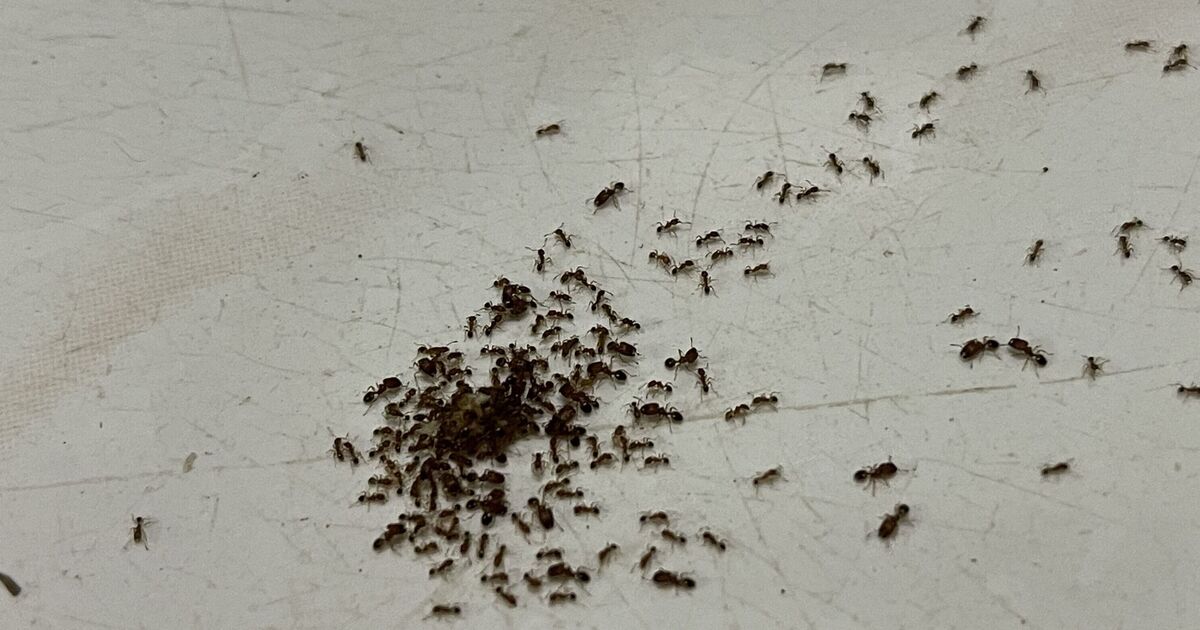
The tip was shared on a popular Reddit thread dedicated to life hacks, where one user posted: “I can’t believe cinnamon worked!” According to the post, the common kitchen spice may be enough to help keep ants at bay.
Costing 85p from Sainsbury’s and 99p from Aldi, it’s a fairly cheap method to try. The user explained they had recently moved into a new home and soon found themselves dealing with an ant problem.
Doing a quick Google search, he found ” a quick emergency solution to stop the ants coming inside” and “found that ants hate cinnamon.”
They wrote: “Apparently, it messes with their pheromone trails. I sprinkled a bunch of cinnamon in the doorway where they were coming in and watched as the ants scattered and ran back outside. Cool. It worked. I figured it was a temporary solution. For the first few days, the ants were still coming right up to the cinnamon line and getting very clearly disoriented but not harmed.
“Fast forward to today. There are no ants outside my door, and I haven’t seen any inside. A $2 bottle of Walmart brand cinnamon from the spice aisle saved my sanity.”
In the replies, one joked: “I love this because there is a superstition that if you blow cinnamon into the entrance of your home on the first of the month, it will bring good luck, and maybe that good luck is just no ants.”
Pets and cinnamon
If you are going to sprinkle cinnamon, be careful around pets. The American Kennel Club notes: “The good news is that cinnamon is not toxic to dogs, though cinnamon essential oil can be toxic for dogs.
“Your dog will not suffer fatal toxic effects from consuming too much cinnamon. But, that doesn’t necessarily mean you should be sprinkling it on kibble. Cinnamon can cause skin and digestive irritation and sensitisation in both pets and people, especially if consumed in large quantities.”
Pest control – what can I do?
In further advice to anyone dealing with ants, the British Pest Control Association (BPCA) warns that pests have the potential to:
- Contaminate homes and workplaces, spreading disease
- Damage possessions and get into your foodstuffs
- Damage property, causing fires and flooding
With this in mind, it’s “essential you take action to deal with it” as soon as you can. The agency adds: “Insects, rodents and birds can easily contaminate food and work surfaces with their excreta, hairs or body parts.
“These are potential pathogens that spread disease. Parasites carried by pest species can also be passed on to humans, causing illness and stress.”
Specifically talking about ants, BPCA notes that the most common ant found in homes is the Black Garden Ant. The body says: “They are highly organised social insects. It is the foraging worker ants that invade buildings in search of food. These are from 3 to 5mm in length and are attracted to sweet foodstuffs which they take back to the nest to feed to the larvae and queen.
“The so-called ant’s eggs sold for aquaria fish are actually the pupae. Flying ants are the reproductive males and females. These mating ants are winged and have a nuptial swarming flight during only a few days in July or August. Mating takes place in the air and the female then seeks out a nest site where she stays for the winter, laying eggs the following spring in order to start up a new colony.”
If you’re dealing with ants, begin by locating the nest entrances. Look for small piles of soil or follow the ants as they travel between the nest and food sources. For a quick solution, pour a kettle of boiling water directly over the nest entrance.
After that, you can use a sugar-based liquid ant bait. Worker ants carry the bait back to the nest, where it is shared with the larvae and the queen, helping to eliminate the entire colony.
In warm, centrally heated buildings, you may come across the much smaller Pharaoh’s ant. Unlike many other ant species, these ants prefer protein-rich foods over sugary ones and often establish multiple nests hidden inside walls or other hard-to-reach areas.
You can read more advice on the BPCA website here.