What players have said about French Open protest as prize money row heats up | Tennis | Sport

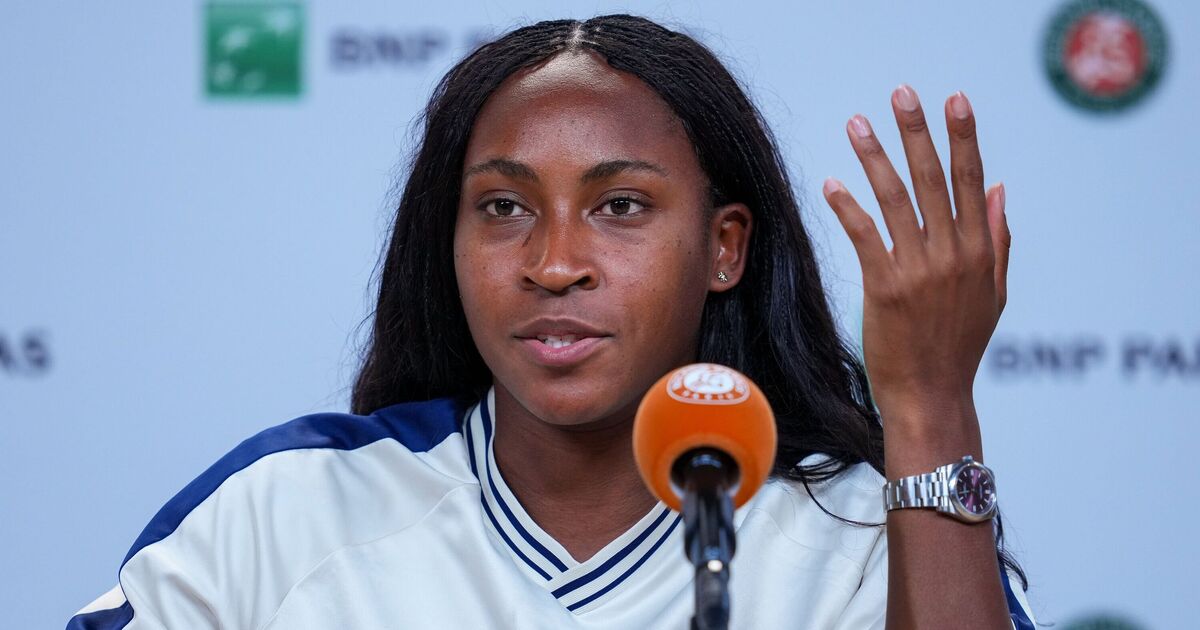
Coco Gauff was one of several players who limited their media commitments at the French Open (Image: Getty)
Media day at the French Open has been a little different this year, with several top players – including Jannik Sinner, Aryna Sabalenka, and Coco Gauff – partaking in a protest. The players have been asking leaders of the four Grand Slam tournaments for a greater share of revenue as prize money, contributions to player welfare schemes, including pensions, and greater say in decision-making. But they feel these requests have gone largely ignored, and some decided to take action by limiting their pre-tournament media duties to just 15 minutes at the French Open.
This 15-minute figure is meant to represent the fact that prize money is expected to amount to around 15 per cent of tournament revenue at this year’s French Open, falling well short of the 22 per cent players receive at ATP and WTA events, and want from the Slams. This year’s total French Open prize pot sits at £53,315,401 (€61,723,000), so the players are essentially asking for an extra £24,880,521(€28,804,067). But as many pointed out, the media day protest wasn’t about simply asking for more money. Express Sport rounds up what players said about the 15-minute protest – whether or not they were joining in.
Aryna Sabalenka
Sabalenka was the first to propose taking action earlier this month in Rome, when she suggested that players could boycott the Slams to “fight for their rights”. On Friday, the world No. 1 said she “stands with [her] words” but added: “We wanted to do it in a respectful way at the beginning, and you guys know how much we respect you and we appreciate you. It’s not your decision, it’s not about you. It’s just we are trying to fight for a fair percentage.”
The four-time Major champion also outlined that she was allotting 10 minutes to her press conference, and five minutes to the world feed broadcast. It means paying TV rightsholders didn’t get time to speak to her exclusively.
Explaining the decision to limit her media time, Sabalenka said: “I feel like the whole point here, it’s not about me. It’s about the players who’s lower in the ranking, who is suffering, and, yeah, it’s not easy to live in this tennis world with that percentage that we are earning. But as the world No. 1, I feel like, you know, I have to stand up and to fight for those players, for lower-level players, for players who are coming back after injuries, the upcoming generation. I feel like our point is pretty clear and pretty fair to everyone. That’s what we are all about.”
Novak Djokovic
The 24-time Grand Slam champion did not participate in the 15-minute media protest, but voiced his support for players’ rights – something he has been vocal about throughout his career. “What I can do is reiterate my own position that I have said many times before, that as a player, which has been my primary role in this sport for so many years, I have always been on the players’ side and tried to advocate for players’ rights and better future for players,” he said.
“But not only top players, players across all rankings, across all fields, particularly the Tier 1 professional tennis, you know, the players on both men’s and women’s side that are lower-ranked, that are often forgotten about. We tend to – when I say ‘we’, I mean including media and all of the intra-sides of the tennis world at the highest level – talk about the prize money cuts and how much are the top players earning or not earning, but we tend to forget how little is the number of people that live from this sport. So I will never stop mentioning that or talking about that, because it is ‘the’ most important field of the tennis professional circuit, that foundational top Tier 1 level for the future of this sport.”
Jannik Sinner
In Rome recently, Sinner suggested that the Grand Slam tournaments hadn’t shown players enough respect. Speaking at the French Open, where he finished runner-up last year, he said the media protest was to put themselves “in a position where we also have a small saying”. He’s not sure what they’ll do if this method doesn’t work, but believes the players will be united.

Jannik Sinner explained that the protest was also about ‘respect’ (Image: Getty)
“This we need to see. It takes all players, and players are very connected, and we are all very much together. I think it’s something good, because with us, you know, events are not possible to play. As I also said in Rome, it’s about the respect, and then, when we have to wait for over a year for just a small response, having the best ten players and, you know, it’s not nice,” he explained.
The world No. 1 also pointed out that it wasn’t solely about prize money. “And in the same time, I hear talking only about prize money, but we talk also about the pension, which is a very important topic, because after [being a] tennis player, also hopefully we get some pension money, and also the decision-making. You know, because who decides, if they start now three Grand Slams out of four, we start Sunday, but we don’t know if they want to start Saturday or Friday. So we would like to have also a small conversation into that. So let’s see where we go. Let’s see also how other Grand Slams are going to react after here, and then we’re gonna decide.”
Coco Gauff
Like Sabalenka, Gauff discussed whether players could one day boycott the Slams to make their requests heard. And it seems those Rome conversations sparked the decision to take action on media day in Paris. “I’m one of the players participating. So I won’t be here too long,” the reigning French Open champion joked.
“No, I don’t know. It was something brought to me after Rome. I know they had discussions in Rome, but I was in the tournament. I think for me it’s not necessarily like going to maybe make a big difference to the slams, like for this tournament, but I think it shows or a lot of us are all on the same page and have kind of a collective action other than just having conversations, and I think this is the first real point of action we have done. Yeah, I think I’m proud of that we were all able to get on the same page.”
Alexander Zverev
The former finalist at Roland Garros reiterated the players’ message that they were fighting for lower-ranked players to make a living. “I feel like if everybody comes together, our tours come together, the Grand Slams come together and get a fair percentage, get, you know, a plan together, that can happen,” he said.
“I feel like a lot of players can benefit from it and not only the No. 1, 2, 3 in the world, where yes, the conversation is we want more money, that’s not just the case. You know, we feel like there is players that are 200 in the world that are exceptional tennis players, and they’re barely making a living or maybe even going minus.”
Our community members are treated to special offers, promotions, and adverts from us and our partners. You can check out at any time. Read our Privacy Policy
Iga Swiatek
The four-time French Open champion explained that the decision wasn’t taken to disrupt the media, but instead to do “less” for the tournament, if the tournament was offering them less in return. She said: “I feel like all of us, we have nothing against media, obviously, and we totally respect you guys. We know how our relationship is important.
“But with the tournament, you know, I feel like we will do more when the tournament will do more for us. Not only us, the top players, because obviously we are the ones that have the most contact with you guys, but, you know, for also the lower-ranked players and the whole structure, you know. So it’s personally, like, nothing against you guys, but for sure, this is the decision that we made, and we will follow it.”
Jessica Pegula
Pegula is a member of the WTA Player Council and WTA Tour Architecture Council, and explained that the 15-minute media cut-off was a good way for players to take a stand without doing something so drastic that people would no longer get on board.
“I think it just came amongst, you know, Larry Scott, the guy we have been working with, and kind of just finding a middle ground of what we can do together that’s feasible, like I said, the week before the Slam, that’s capable,” she said. “If you try to talk about more extreme circumstances and then all of a sudden people aren’t on board, you can’t get anything to happen. So, again, it’s like finding that meet in the middle of things that are possible and doing all in a busy week before a Slam.”
“It may seem like we’re just asking for more money or why are the top players complaining, but at the same time, like, these people want to hear us talk, so we’re trying to basically use our voices, and maybe the more media presence that we get to again see the ecosystem of the sport is going to continue building and growing. And by that, yeah, we have said the revenue share needs to be higher, player welfare needs to be higher and that will, in return, help a lot of lower-ranked players. So I think the next steps would be to build up that communication with them, for sure. But right now, obviously, just trying to get us all on the same page and showing that unity on the men’s and women’s side was our focus. I’d say the communication is still good with them. I don’t think it’s not bad or anything.”