World’s biggest castle that’s 4 times bigger than Windsor | World | News

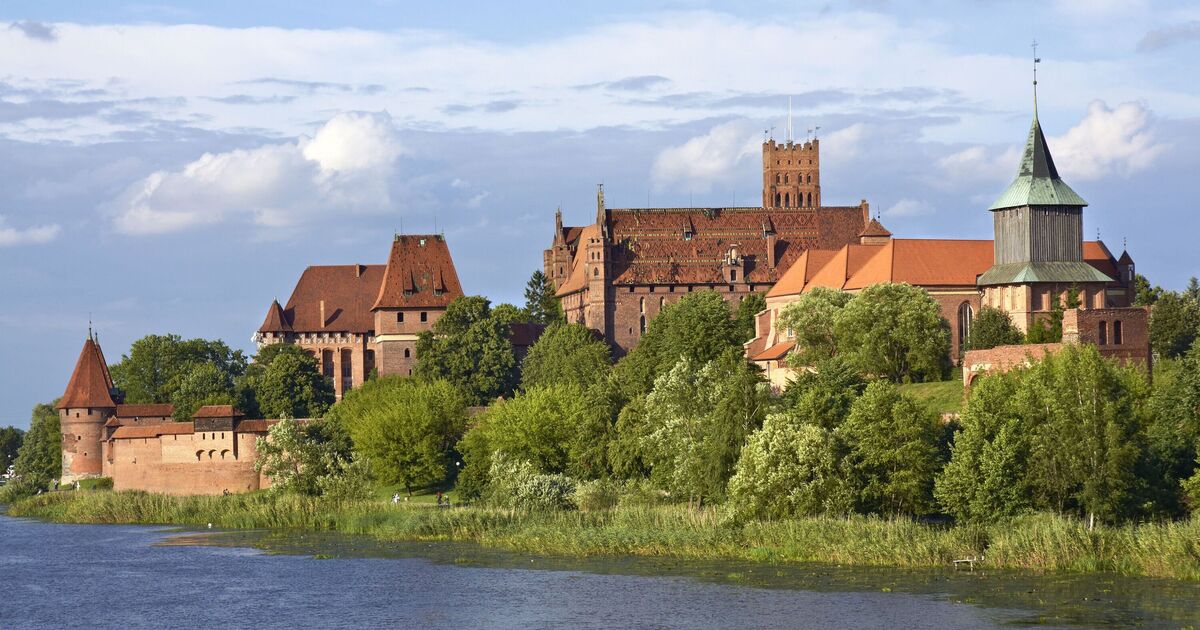
The fortress covers around 21 hectares or 52 acres (Image: Getty)
There are thousands of castles around the world, ranging from royal palaces and medieval fortresses to ruined strongholds that have stood for centuries. Many are famous for their history, while others attract visitors because of their size or architecture.
Britain alone is home to some of the world’s best-known castles, including Windsor Castle, which has been used by the Royal Family for hundreds of years. But one castle in Europe is much larger than Windsor and is recognised as the biggest castle on Earth by land area.
READ MORE: UK’s scariest bridge leads to 800-year-old castle and cost £4million to build
READ MORE: Fairytale Gothic castle hidden in ancient woodland is a ‘true wonder’

The largest castle in the world is Malbork Castle in Poland (Image: Getty)

Construction of Malbork Castle began in 1274 and continued for more than 130 years (Image: Getty)
Experts at Castle Collector say the largest castle in the world is Malbork Castle in Poland.
The fortress covers around 21 hectares, or 52 acres, making it roughly four times larger than Windsor Castle, whose grounds cover about 13 acres.
Located in the town of Malbork in northern Poland, the castle was built by the Teutonic Order, a German Catholic military order.
Construction began in 1274 and continued for more than 130 years before the complex was completed in 1406.
When finished, it became the largest brick castle in the world, a title it still holds today.
The castle was originally known as Marienburg and was named in honour of Mary, the mother of Jesus.

When finished, it became the largest brick castle in the world (Image: Getty)

Brick was used throughout the construction (Image: Getty)
It later became the headquarters of the Teutonic Knights and served as the home of the Grand Master of the order.
At its peak, around 3,000 brothers-in-arms are believed to have lived within the castle complex.
The huge site is made up of three separate sections known as the High Castle, Middle Castle and Lower Castle.
Dry moats, defensive walls and towers were also built to help protect the fortress.
Brick was used throughout the construction because suitable building stone was difficult to find in the Vistula delta region.
The castle changed hands several times over the centuries. Most notably, following the Thirteen Years’ War, it was sold to King Casimir IV of Poland in 1457 and later became one of several royal residences.

In 1997, UNESCO added Malbork Castle to its World Heritage List (Image: Getty)

The castle is around 50 minutes by train from Gdańsk (Image: Getty)
During the Second World War, more than half of the castle was destroyed in fighting in 1945. Large restoration projects then followed, and the complex was carefully rebuilt over several decades.
In 1997, UNESCO added Malbork Castle to its World Heritage List. Today, it is one of Poland’s most popular tourist attractions.
Visitors can explore the castle’s halls, courtyards, towers and museums while learning about more than 700 years of history.
The castle is around 50 minutes by train from Gdańsk and is open daily throughout much of the year.
Adult tickets for the main Historical Castle Route cost 80 Polish zloty (£16), while reduced tickets are available for 60 zloty (£12).
For tickets and more information, click here.