WW3 fears rocket as Putin builds new military bases on NATO border | World | News

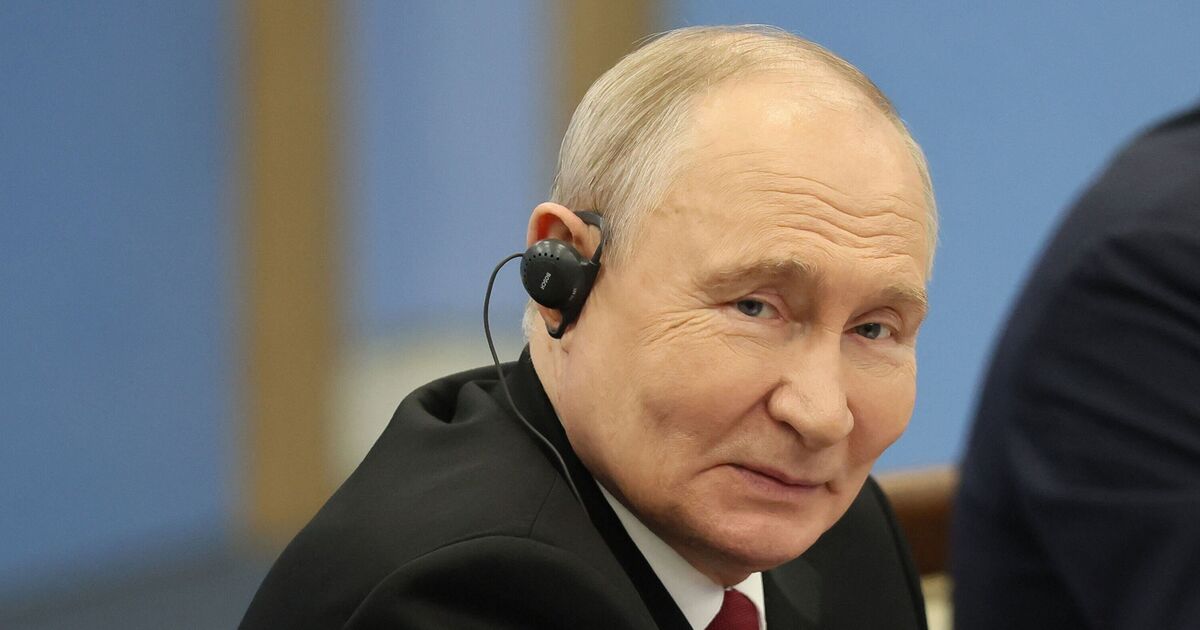
Vladimir Putin is said to be preparing for a possible future conflict with NATO (Image: Getty)
Britain and other nations must be ready to deter or defeat Vladimir Putin’s forces as Russia builds new and expanding existing military bases along its northern border, experts have warned. They suggest the enlargement and construction of new hubs is likely in order to support future “force projection capabilities” against NATO. The Institute for the Study of Warfare (ISW) reported that Norwegian, Swedish, and Danish broadcasters and a Baltic news portal reported on June 10 that satellite imagery showed the construction and enlarging of bases along the border with Nordic and Baltic states.
Intelligence officers and senior military officials told Danish outled DR that Russian forces were “engaging in preparation for conflict”. Ex-Finnish intelligence officer, Marko Eklund, said that the Moscow plans to have around 115,000 soldiers stationed at the northern border with NATO after the war in Ukraine ends, and that Russian forces began the construction of a new base in Novaya Vilza near Petrozavodsk, large enough for between 4,000 and 6,000 personnel. Finnish army chief, Pasi Valimaki, told Swedish broadcaster SVT that his country expects Vladimir Putin to station 80,000 soldiers at the border between the two countries.
The ISW added: “A source reporting on the Russian Northern Grouping of Forces claimed that the Russian command is relocating unspecified elements of the 44th Army Corps (Leningrad Military District [LMD]), except for the command post, to the Republic of Karelia.
“The source claimed that the elements of the command post are currently stationed in Luga, Leningrad Oblast, and have been waiting to move to Petrozavodsk when Russia finishes constructing the bases.”
Experts also noted that a Kremlin-affiliated Russian milblogger claimed on June 11 that forces are modernising at least 19 barracks, infrastructure, and storage facilities in Pechenga, located around 11 kilometers from the Finnish border, on the Kola Peninsula.
Moscow is also expanding a naval infantry base and armored vehicle and landing-craft fleet near Baltiysk, Kaliningrad Oblast, it added.
It is feared that an attack on NATO from Moscow could trigger WW3 as the organisation’s Article 5 agreement states that “an armed attack against one NATO member shall be considered an attack against them all”.
The ISW wrote: “Russia is establishing these bases to support potential future military actions against NATO, though such ground operations remain unlikely, as most of Russia’s combat power is participating in operations in Ukraine.

Sir Keir Starmer unveiled the Defence Investment Plan this week (Image: Getty)
“The establishment of these bases will support Russian efforts to more rapidly project forces against NATO following the end of active fighting in Ukraine, however, and NATO must be prepared to deter and, if necessary, defeat a Russian threat against its borders relatively quickly following the end of combat in Ukraine.”
But specialists added that Russian forces “remain unlikely to conduct ground operations” against NATO “in the near-term”.
British officials have warned that an attack against NATO could occur as soon as the beginning of the next decade.
Chair of the House of Commons Defence Committee, Tan Dhesi MP, said on June 30: “Given the rising threat level, including warnings from the Prime Minister that NATO needs to be ready for an attack by Russia by 2030, the UK needs to properly invest in our defence and meet the moment.”
The Prime Minister, Sir Keir Starmer, unveiled the government’s Defence Investment Plan (DIP) last week, with a promise to increase defence spending by £15billion, and modernise the armed forces so they are prepared for drone attacks and threats from the Kremlin.
A decision on where the £4.7billion will come from is to be made at the Budget in the autumn, which is most likely to be presented by Andy Burnham’s Chancellor.