The world’s best war movie ever made – ‘leagues ahead of anything else in Hollywood’ | Films | Entertainment
Few films about the Second World War have carried the same weight as Schindler’s List. Steven Spielberg’s 1993 masterpiece has been ranked as the best war film of all time on IMDb’s list of the 100 greatest war movies. More than three decades after its release, it remains one of cinema’s most devastating portrayals of the Holocaust.
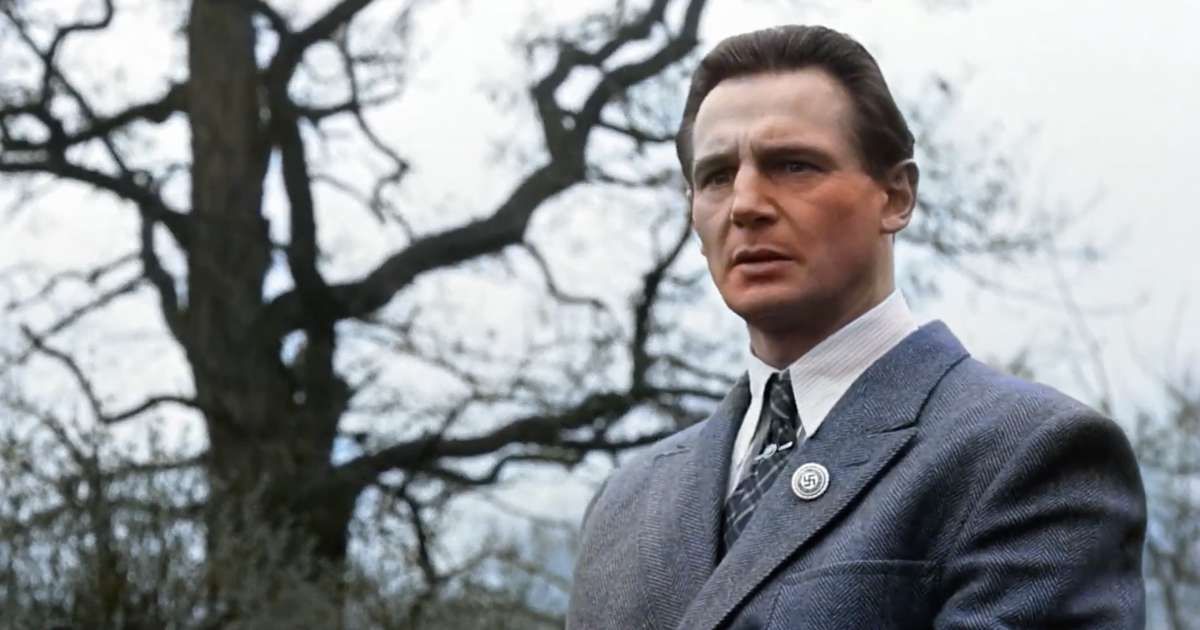
The black-and-white film is based on the true story of Oskar Schindler, a German industrialist who saved more than 1,000 Jewish people from the Nazis by employing them in his factories. It was adapted from Thomas Keneally’s Booker Prize-winning novel Schindler’s Ark, which drew on survivor testimonies. At first, Schindler is shown as a businessman who sees war as an opportunity. He arrives in Nazi-occupied Kraków hoping to profit from cheap Jewish labour and military contracts.
But as the brutality around him becomes impossible to ignore, Schindler begins to change. What starts as self-interest becomes an act of moral courage, as he uses his factory, his money and his influence to protect the workers whose names appear on his list.
Made on a budget of around $22million, the film went on to earn more than $320million worldwide, while also becoming one of the most acclaimed dramas of the 1990s.
Liam Neeson gives a restrained performance as Schindler, while Ben Kingsley brings quiet dignity to Itzhak Stern, the Jewish accountant who helps him save lives. Ralph Fiennes is chilling as Amon Göth, the sadistic Nazi commandant of the Płaszów camp.
The film won seven Academy Awards, including Best Picture and Best Director, and is often regarded as Spielberg’s most important work.
At the time of its release, a review for The Guardian, the film was described as being “leagues ahead of anything else” Hollywood had attempted on the subject.
Its importance feels renewed today, amid rising concern about antisemitism in Britain and across the world. The Community Security Trust recorded 3,528 antisemitic incidents in the UK in 2024, the second-highest annual total it has ever reported.
For that reason, Spielberg’s film remains essential viewing. Its power lies in that refusal to let the past feel distant.