China retreats from Hormuz Strait in dramatic tanker U-turn | World | News
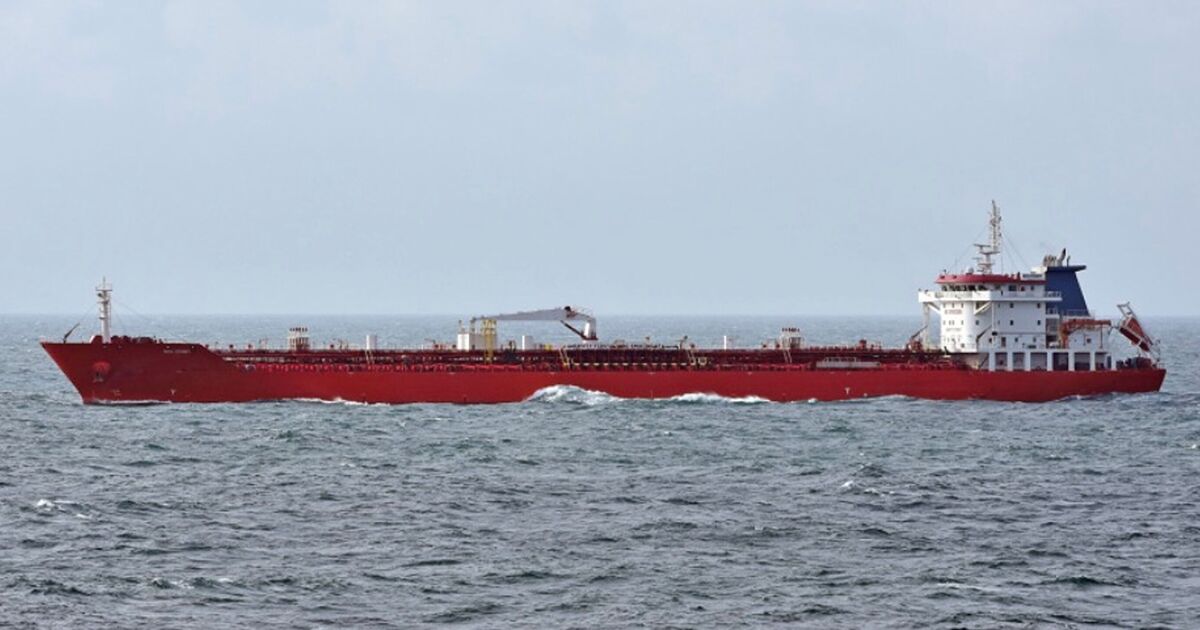
China appeared to test Donald Trump’s Strait of Hormuz blockade on Tuesday — and blinked first, as a sanctioned Chinese tanker reversed course rather than attempt a transit of the contested waterway.
The Rich Starry had been heading for the Omani port of Sohar with a cargo of 250,000 barrels of methanol when it veered away on entering the Gulf of Oman, where American naval forces are conducting round-the-clock patrols. The vessel’s destination was updated to “for orders” — shipping shorthand for a ship awaiting revised instructions from its operators.
Had it continued, the Rich Starry would have been the first vessel to challenge the blockade that Trump put in place on Monday, when he also threatened to “eliminate” any Iranian ships that attempted to force a passage.
The blockade’s precise scope has shifted since it was announced. On Sunday Trump said the Navy would intercept vessels moving in either direction through the strait. By Monday the order had been widened to cover ships moving in and out of Iranian ports directly.
Despite those declarations, the Wall Street Journal reported on Tuesday night that 20 commercial vessels had managed to pass through the strait in the previous 24 hours — a figure that sits uneasily alongside the military’s own account of events.
Blockade declared fully operational
US Central Command moved to assert control of the narrative on Tuesday night, announcing that the blockade was complete.
“A blockade of Iranian ports has been fully implemented as US forces maintain maritime superiority in the Middle East,” Admiral Brad Cooper, CENTCOM commander, said in a statement posted to X.
He added that an estimated 90 per cent of Iran’s economy depended on seaborne international trade. “In less than 36 hours since the blockade was implemented, US forces have completely halted economic trade going into and out of Iran by sea,” he said.
Earlier in the day two oil tankers that had set out from Chabahar Port were stopped by a Navy destroyer operating in the Gulf of Oman. The warship made contact by radio and the vessels were turned around before they could proceed further. Reuters cited two officials in reporting the interception.
Those two tankers were part of a larger group. CENTCOM said a total of six merchant vessels had been ordered back towards Iranian waters after entering the Gulf — a number the American military used to support its assertion that no ship had successfully broken through.
That claim sits in direct tension with the Wall Street Journal’s reporting of 20 vessels passing through in the same period.